The Utopia Project Volume III: The MacDowell Colony

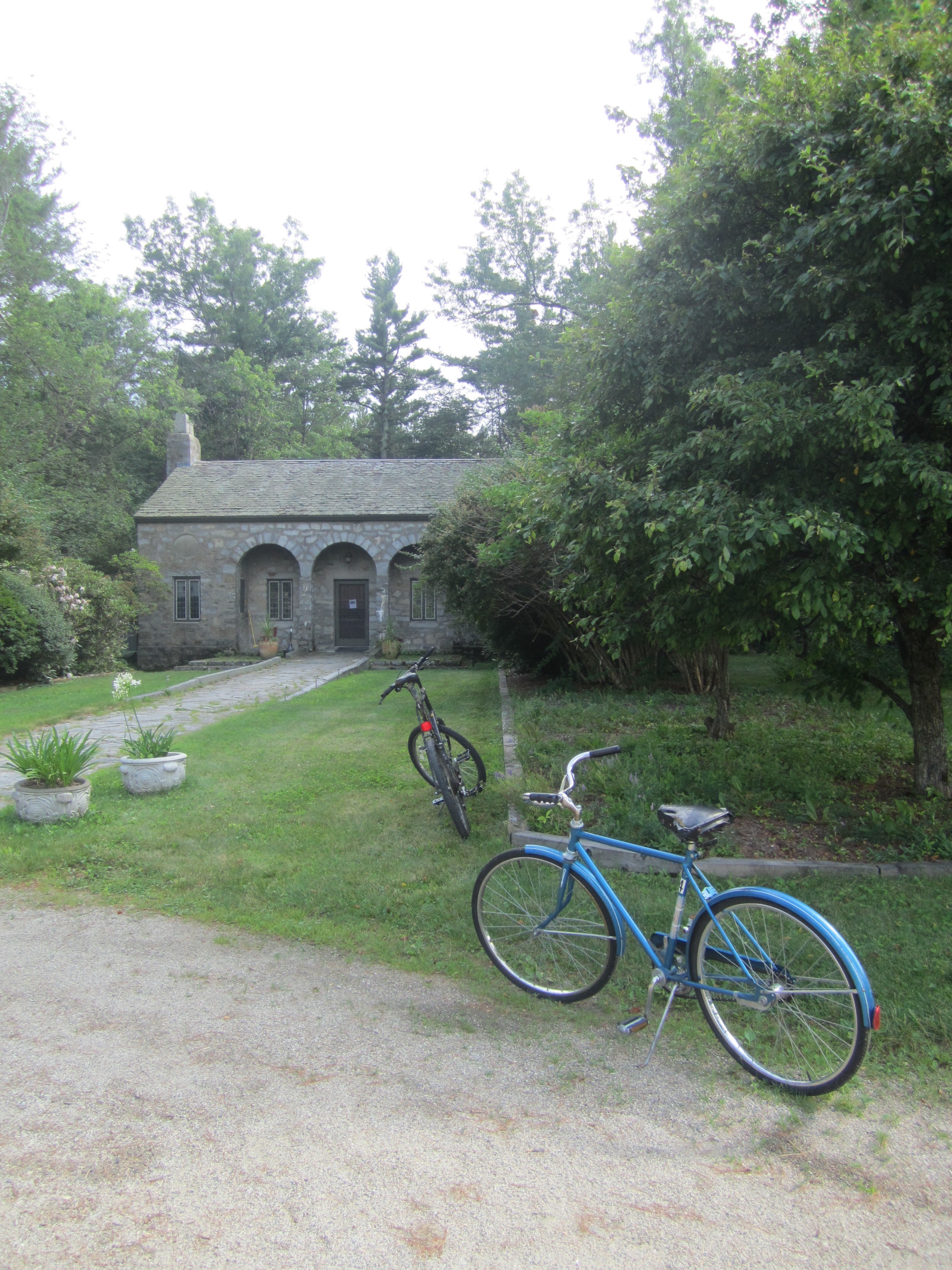
The library at the MacDowell Colony

The main building at the MacDowell Colony

Far into the wilds of southwestern New Hampshire, down a back road shadowed by pine trees, is the MacDowell Colony. It is an artists’ residency that is over 100 years old tucked away in the small town of Peterborough. It was founded by composer Edward MacDowell and his wife Marion, a pianist, who bought a farm there in 1896. Edward felt he created his best work in on the farm and when he passed away Marion championed the idea of giving artists a chance to thrive in the same environment he found so inspiring.

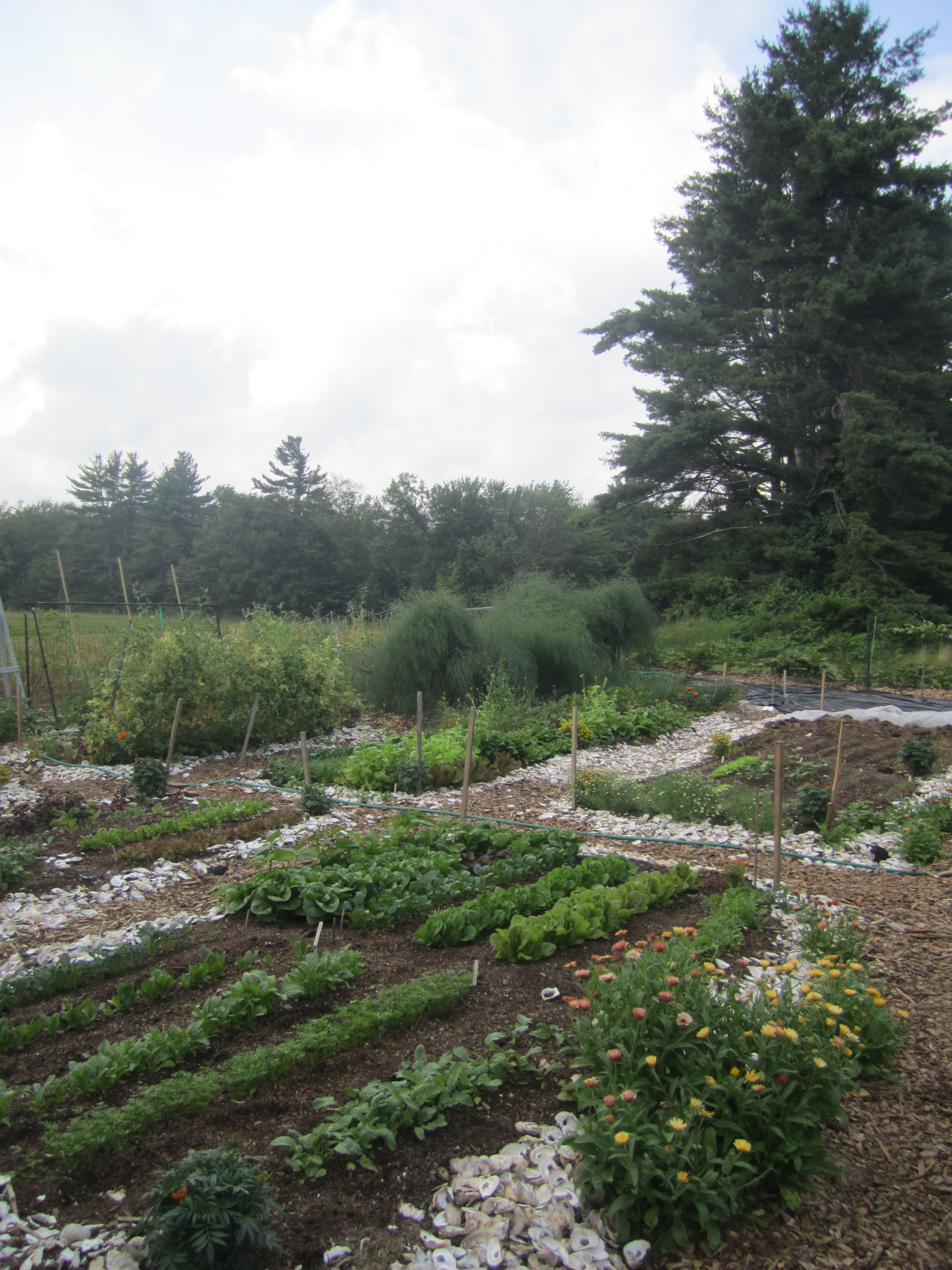
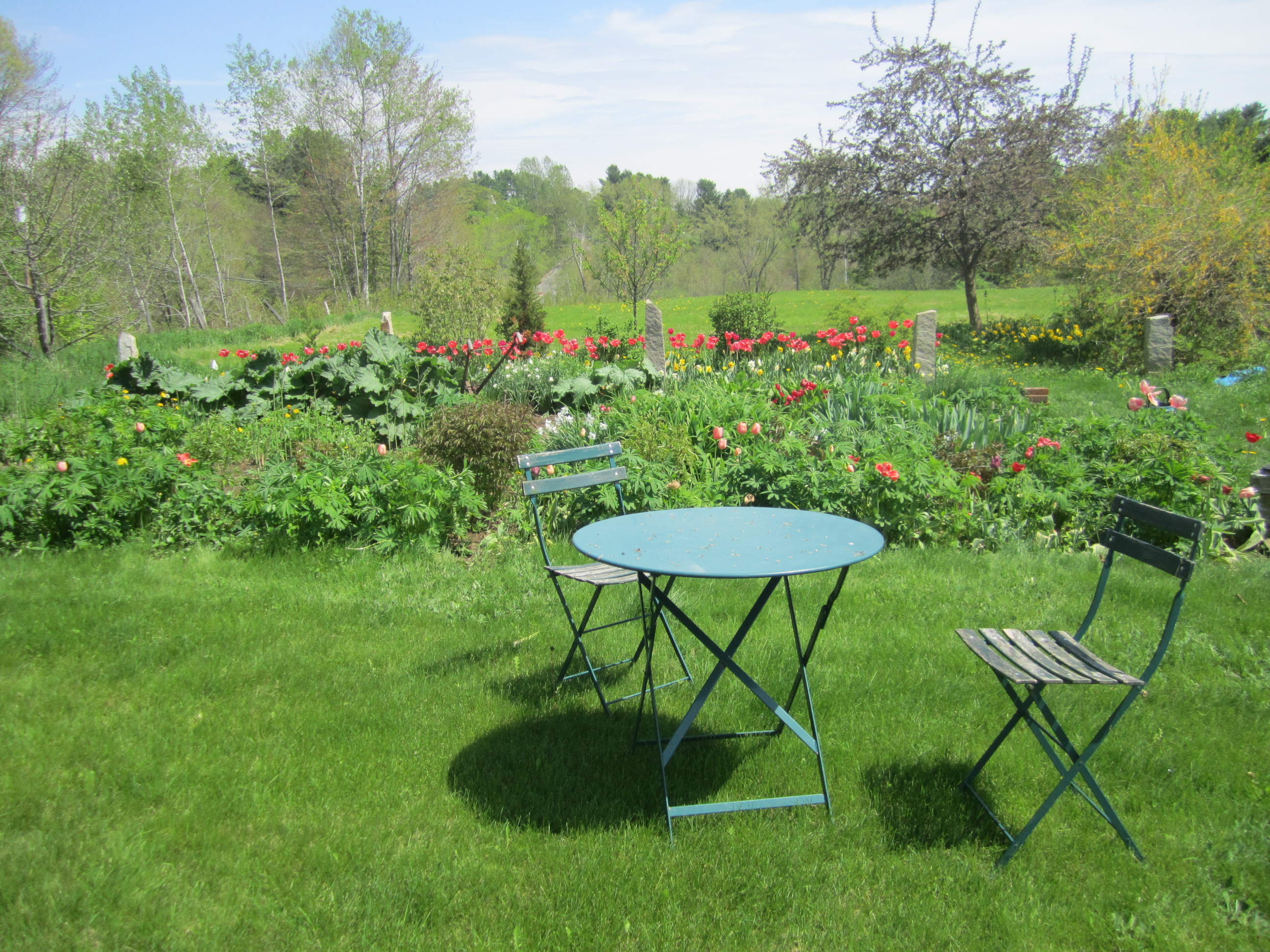
Kitchen garden at MacDowell

MacDowell Chickens

The MacDowell Colony invites artists from all disciplines to take part in a residency where they work in a community with their peers. Artistic excellence is the only standard for acceptance and all room, board and tuition is covered.

Inside the library at MacDowell

Entering the grounds of MacDowell feels stepping into a unique microcosm of society. Each resident is given a bike to use to travel around the campus to their studio, residence and the library. There are regular talks and presentations. The food is locally produced, much of it grown on the MacDowell campus. A local sheep herder brings their sheep to graze on the fields of the colony during the day.

Residents' wine bottles in the dining room

I also admired MacDowell’s openness and interaction with the local community in Peterborough and Southwestern New Hampshire. They regularly host lectures, presentations, screenings, and performances that are open to the public both on the campus and in downtown Peterborough, a super cute New England village if I’ve ever seen one (and I’ve seen a lot!). The Resident Director David Macy is very involved in making Southwestern New Hampshire a culturally vibrant place and is involved in town and regional planning organizations. I think this speaks volumes to the strength and history of the colony and how it is not just an isolated place for artists to perfect their craft, but a dynamic organization that helps serve as a cultural anchor for the region.

I have a secret dream to move back to Maine and start an artists residency and organic restaurant on my parents’ farm. David’s involvement in cultural development in Southwestern New Hampshire helped me see that my vision could also combine my interest in city planning and public policy and that a pastoral artists residency can also be a responsible community member.

Portland Revisited and Seattle Discovered

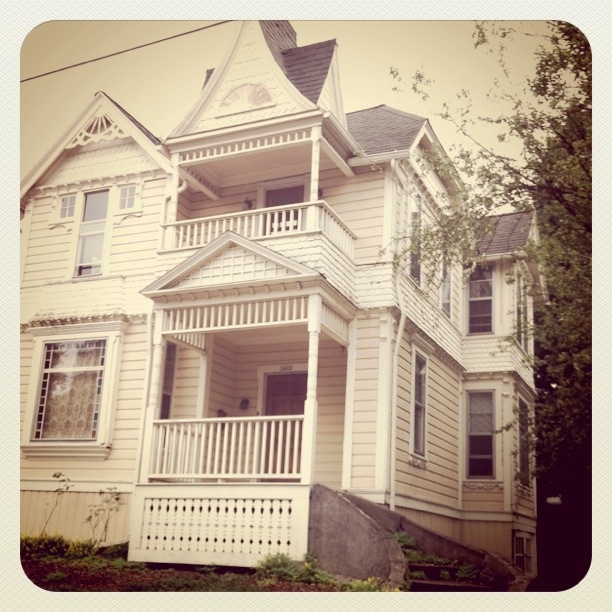
The house in Portland, Oregon where I lived in in the summer of 2002 and 2003

In the fall of 2000 I packed my life into boxes, shipped them across the country, and began a five year love affair with Portland, Oregon. I lived in a house that housed a record label, regularly hosted indie pop shows, and sheltered a somewhat revolving cast of characters who were indie rock musicians or appreciators of the genre. After a year of zine making, playing in bands, biking and making intense friendships (the kind you kindle when you are 19 and you are linked by common interests, far fetched ideas and, often, a lot of drama) I moved to NYC to go college. That was right in time for September 11th, but that’s another story.

Sign outside the Independent Publishing Resource Center

While I was in college I returned to Portland as often as I could and lived there in the summers and helped organize the Portland Zine Symposium until 2004. I deeply associate Portland, its relaxed lifestyle, political commitment and particular aesthetic with my early 20’s, with finding and revising my identity and informing the person I decided to become.

Crepe cart at Cartopia on Hawthorne in Portland

Portland has changed a lot in the past 10 years. By changes I mean it has intensely gentrified and every year another street seems to be taken over by a host of art galleries, wine bars, eco-friendly, artisan produced goods, and food truck pods. I often wonder what the underlying economy is that drives this relentless development. It’s also become somewhat of a national joke thanks to the (very funny) TV show Portlandia. Sometimes it really does feel like the dream of the 90’s is alive in Portland.

Brunch at Junior's, one of my favorite PDX breakfast spots then and now

However, I’m also happy that many of my friends have grown up and been able to buy houses at relatively cheap prices and been able to build their adult lives in Portland. I visited my favorite place, the Independent Publishing Resource Center, which is growing and flourishing. I even attended the Portland Zine Symposium, which is still going strong after 10 years. The choice of zines and dedication to independent media and radical ideas about and society was just as strong as they were when we began it 10 years ago.

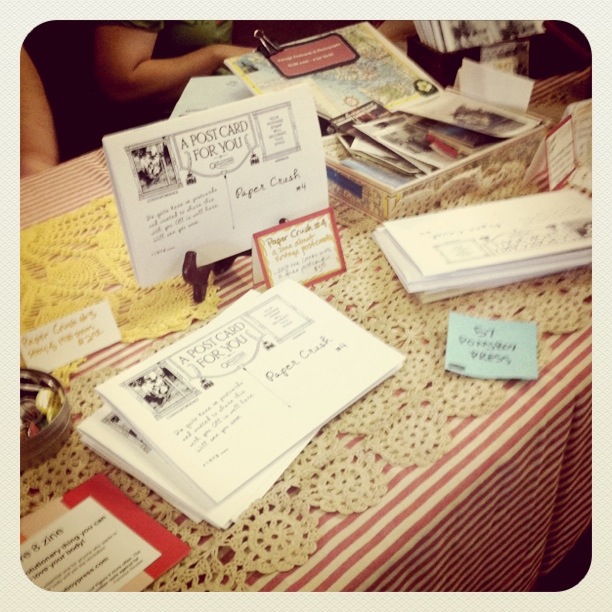
Pony Boy Press' Table at the Portland Zine Symposium

Playing in the park with my former housemate's daughter

After Portland I headed further up I-5 to Seattle. Despite my long standing, long-distance fascination with Portland I had hardly spent any time in Seattle. SMH went to college there and despite growing up in Central Washington, his family now all live in the Seattle area.

Puget Sound, Seattle

We jumped in to some touristic activities. This included visiting the Crab Pot, a seafood restaurant on one of the downtown piers that give you a pot of steamed seafood, a mallet, a board and a bib. Coming from Maine I know that lobster crackers would be much more effective than a mallet, but with no shame I donned my bib (I had to go to work after lunch and was wearing work clothes) and dug in.

Seafood Lunch at the Crab Pot

Donning my bib with no shame at the Crab Pot

I also got to enjoy some delicious coffee on Capital Hill, and an astronomically large, grease soaked breakfast (in the middle of the afternoon) at Beth’s Cafe in Green Lake.

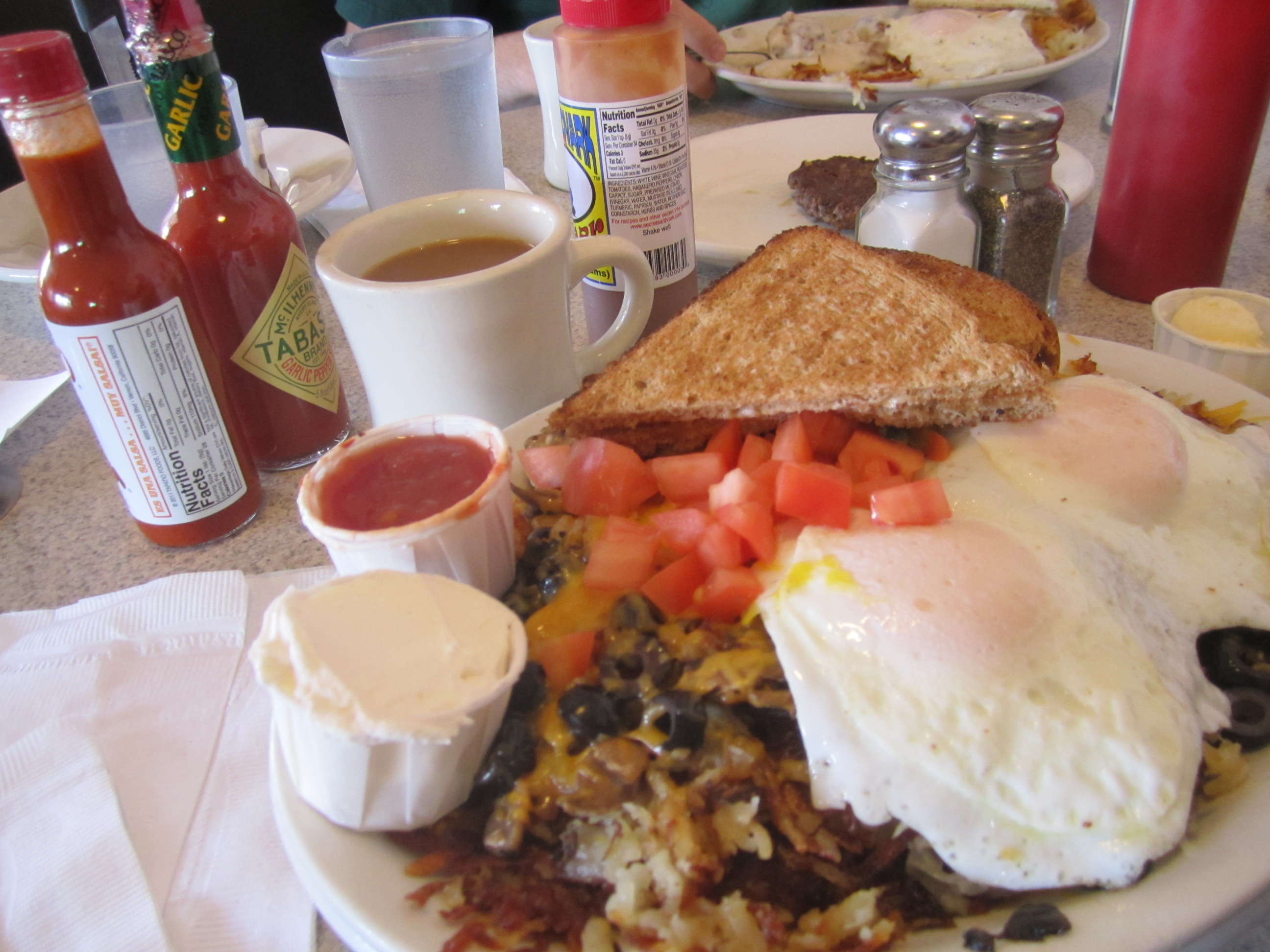
Breakfast at Beth's. The hasbrowns and coffee are unlimited. The portoin sizes are legendary.

I really wanted to love Seattle. At first I thought that it would combine my need for a big, cosmopolitan city with the nature, greenery and relaxed lifestyle I love the Pacific Northwest for. But here was a problem I did not anticipate: the traffic. Seattle has terrible urban planning and only adequate public transportation. This is surprising to me, given that Portland, Oregon, has made a major commitment to improving its public transit infrastructure over the past 20 years or so. Seattle’s current mayor is a major bike supporter, but I don’t see a lot of infrastructure being created to encourage cycling. And parking. In addition to traffic and whether I-5 will be totally backed up, that’s all everyone talks about. Where to find it. How to pay for it. I do not want this to be my life. So for now, Seattle is off my “I’ll move there one day when I get sick of New York City” list.

Outside of Trading Musician in Seattle

East of the Mountains

St. Andrew's Mission

St. Andrews Mission, near Crow's Shadow Institute, Umatilla Reservation, Oregon

Usually when someone says “Northwest,” referring to the Northwest United States, the image that comes to mind is of evergreens, mountains, mist, a wild coast line and rain. Lots of rain. However, east of the mountains the landscape is quite different. Between the Cascade and the Rocky mountains is a large area of high desert. It is sun drenched, windy, hot and dry. Some of it is flat, some of it is rolling hills and fields, other parts look like you are on the moon. Upon flying into Spokane, Washington several weeks ago I found out that this area is called the “Inner Northwest.”

Last Best Place

Bumper Stick seen at 50,000 Silver $

Here’s where my geography gets a little nebulous. I would say the “Inner Northwest” includes eastern Washington and Oregon, as well as Idaho, and Western Montana. But I don’t know if Montana would consider itself Northwest or “Inter Mountain” west. Anyway, what I love about these places is they are, unquestionably, the west. You know when you pass roadside attractions like 50,000 Silver $ that you are in the west.

50,000 Silver $!

50,000 Silver $, Montana

I have an aunt and uncle who live near Sheridan, Wyoming and spent many summer weeks as a child traveling out there to go visit them, help them heard cattle and ride a Welsh pony through the sagebrush (yes, really). So I have a strong affection in my heart for “big sky country,” lodge pole pines, Stetson hats, and steep mountain passes. I love long Montana coal trains that stretch on forever (though waiting for them as a railroad crossing is not fun) and was thrilled on this recent trip to watch them be assembled in downtown Missoula.

Train Yards, Mountains

Train yards, downtown Missoula, Montana

Red Sky at Night II

Sky in Missoula, Montana

The most striking part of driving through such beautiful countryside along Interstates 90 and 84, as well as smaller routes, was realizing that the last time I drove through this part of the country I was 21 years old. I was living in Portland, Oregon for the summer and had borrowed my Mom’s car to drive out and back from the east coast. This put over 6,000 miles on the car in 3 months, which may have been its death knell.

Trail Bridge

National forest, Idaho, along route 12

However, driving along those highways and byways I felt like I had just been there. I remembered the place I stopped along the road after Lookout Pass in Montana to lay on the ground and look up at the trees and sky and breathe in the sharp, piney air. I found the motel that K. and I stayed in for a night in Missoula. Everything came rushing back. The landscape looked just how it did then. And then I realized, wait, that was 9 years ago! I have lived so many lifetimes since then. I’ve finished college and nearly finished graduate school. I’ve loved and lost and loved and lost and loved again several times. I almost moved to another country and decided against it and decided to make my life in New York. I’ve held several jobs and lived through one of the worst presidencies the US has ever known. And yet, I felt, out there, I could have just as easily met 21 year old self on the side of the highway. Young, restless, a ball of nerves and energy, unsure of her place in the world.

Idaho River

River near Florence, Idaho, along route 55

Modern Hotel at Sunset

Modern Hotel at Sunset, Boise, Idaho

Rainbow Cafe

Rainbow Cafe, downtown Pendleton

Outside of Pendleton

Umatilla Reservation, Oregon

I’m still searching for my place in this world, but I am thankful for this landscape. The lanscape grounds me and to help me remember where I have been and how wide the spaces are where I could go. And I know that no matter where I go, this landscape will go on without me, as it always has.

Columbia River in sight

Columbia River, Oregon

I waited all trip for this burger!

Char Burger, Cascade Locks, Oregon (with the Bridge of the Gods out the window)

More photos on flickr.

I know where paradise is and you can get there on a ferry from Tsawwassen

BC Ferry on its way

BC Ferry off Galiano Island

My life is made up of moments made possible by the generosity of my friends. Sometimes they are people who I have known for years, who I have slowly and surely built a relationship with based on shared experiences and ideas and we give to each other because we have known each other for so long and our roots run deep. Sometimes friendship comes in a flash and I feel a kindred spirit with someone I have just met and the generosity pours out suddenly. It was the second case that got SMH and I on a ferry from Tsawwassen, British Columbia, to Galiano Island last weekend. Galiano is an island just north of Washington state in Canada’s Gulf Islands and a place that I’ve decided closely resembles paradise.

Dusk, Whaler Bay

Dusk on Whaler Bay, Galiano Island

I met our host J., who lives in Vancouver, at a baby shower for a mutual friend last winter. I mentioned that I was probably going to come to the Pacific Northwest in the summer and she mentioned “the island.” We hit it off and hung out again before she had to head back to Canada and her job with the BC Ferry company. When we made plans to visit the island I had no idea what a treat we were in for or how generous J. and her family would be when we were there. Getting to Galiano is easy – it’s about a 40 minute drive south of Vancouver to Tsawwassen, the port where the ferries leave from, then about an hour sail across. Even though you can still see the Tsawwassen terminal from the docks of Galiano once we stepped onto the island we stepped into a different world.

Fishing at Sunset

Fishing at Sunset, Galiano Island

Our weekend consisted of catching  crabs and fish, huge, ugly, monstrous looking Ling Cod to be exact, and eating them that same evening; drinking wine on the deck while the sun set over the bay; cracking up while watching Bill Murray in Stripes on VHS; walking through thick forests to a pebbly beach with frigid water; admiring seals, otters and eagles; and even taking the plunge into the refreshing waters of Whaler Bay.

Whaler Bay, Galiano Island

Whaler Bay, Galiano Island, Afternoon

Jump!

Taking the plunge into Canadian waters

Growing up in Maine I used to spend a week or two a summer at lucky friends’ summer homes on islands, so I know a bit about the island life and how transporting it can be. However, there was something about Galiano that seemed even more magical. Maybe it was the thick cedar and fir trees covered in moss in the forest, or Mt. Baker towering over the bay in the distance, or the fact that nature is so abundant that you can pull your dinner out of the water (provided you have a proper fishing license). Galiano Island is one of those rare places that worked its way into my heart quickly and suddenly and I know I will keep it there forever, not unlike those suddenly generous friendships that continue to endure throughout my life.

Mt. Baker at Sunset

Mt. Baker in the distance at sunset

O, Canada II

O, Canada!

The Utopia Project Part II: Woodstock Byrdcliffe Guild

Why do artists need to get away to create? Does creativity really flow better in a rural idyll where one could shut out the outside world if one so chose?  Does modern life really hamper creativity and the ability to produce as an artist? Over 100 years ago Byrdcliffe was founded in Woodstock, New York to test out these ideas as a utopian Arts and Crafts community. The Arts and Crafts movement believed that industrialization and urbanization was compromising peoples ability to live and create and put a great value on the handmade and the skill of the craftsman.

The Byrdcliffe campus certainly seems the embodiment of the Utopia Project. It is transporting: a series of arts and crafts cabins from the turn of the century connected by dirt roads and trails. A stream runs through it and light filters through the birch trees. After I finished working I spent the afternoon hiking up the nearby Overlook mountain to explore the ruins of an old hotel and to look with awe over the Hudson Valley stretching out below me. I used to think that the golden, soft quality of light in Hudson River School paintings was a whole lot of Romantic bullshit.  However, the more time I spend in the Hudson Valley, the more I see that painters like Asher B. Durand and Thomas Cole were actually capturing the quality of light that they observed.

The view from Overlook mountain

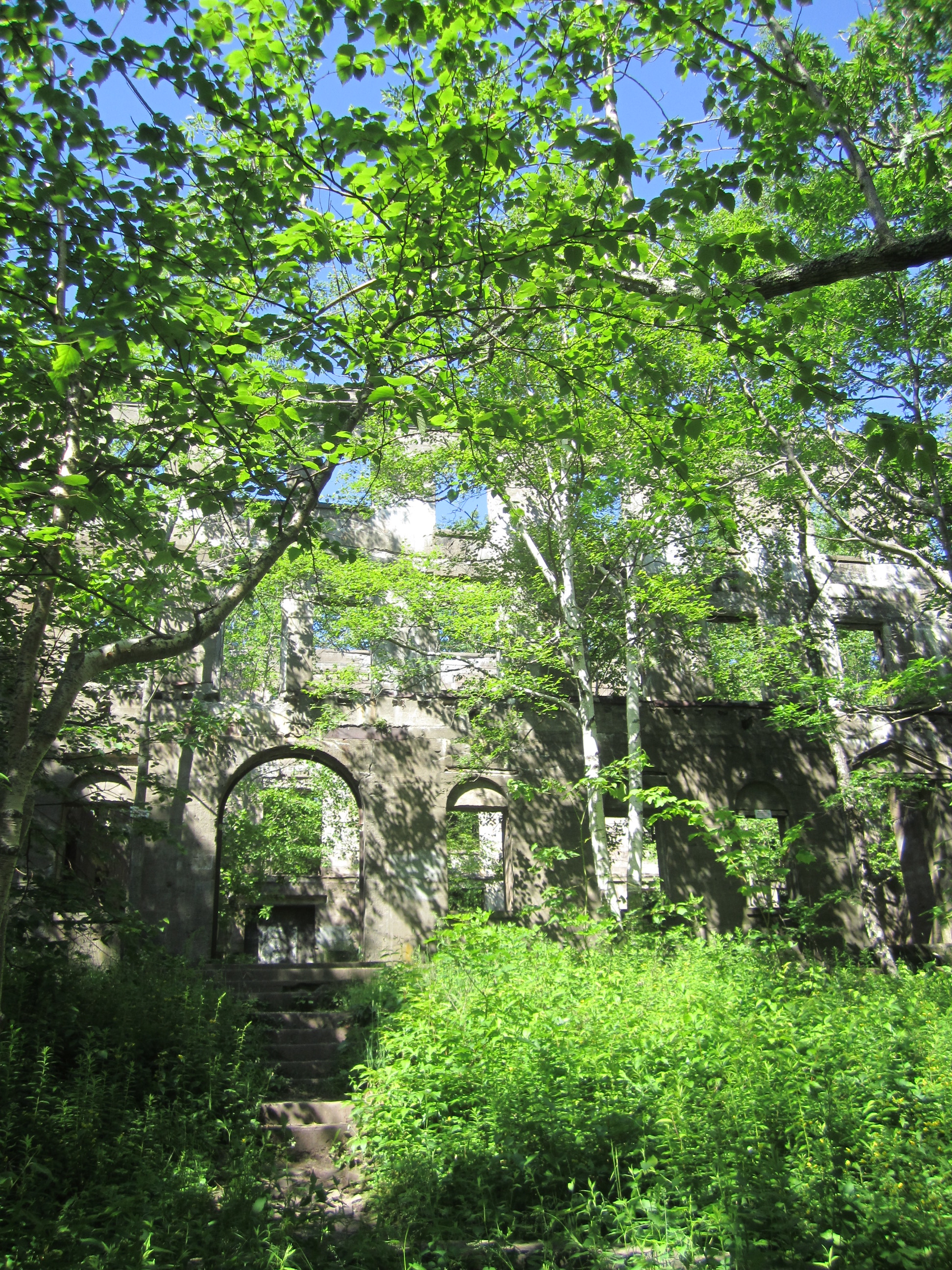
Ruins of the Overlook hotel

I cooked dinner in the communal kitchen the residence where I had given a room for the night and spent the evening eating and talking about art, politics and building a creative life with some of the resident artists. I felt privileged to be able to be able to step into the world of actually living as a resident artist for a night. Byrdcliffe is like an artists summer camp where there are few rules besides respecting the quiet and focus of others. As a child I never liked summer camp, but I found myself reluctant to leave Byrdcliffe. I think that’s because it combines the fun, peace and isolation of camp with the focus and autonomy of adulthood.

One of the residency bedrooms

Lunch at the Byrdcliffe Cafe

Just invoking the name “Woodstock” brings up a whole trope of myths in American culture. To an outsider like me I wondered how the region around Woodstock, which is sleepy and rural and mountainous, was host to such an important cultural event back in the 1960’s. Places like Byrdcliffe help provide an answer. Byrdcliffe was founded in 1902 as an experiment in utopian, artistic, arts and crafts living, supported by a wealthy Englishman. It has grown into a nonprofit arts services organization that now provides acts as a touchstone for artists throughout the Woodstock region offering exhibitions, performances, and many professional development opportunities. In addition to those who participate in the residency program, artists can also rent cabins and studios for the summer.

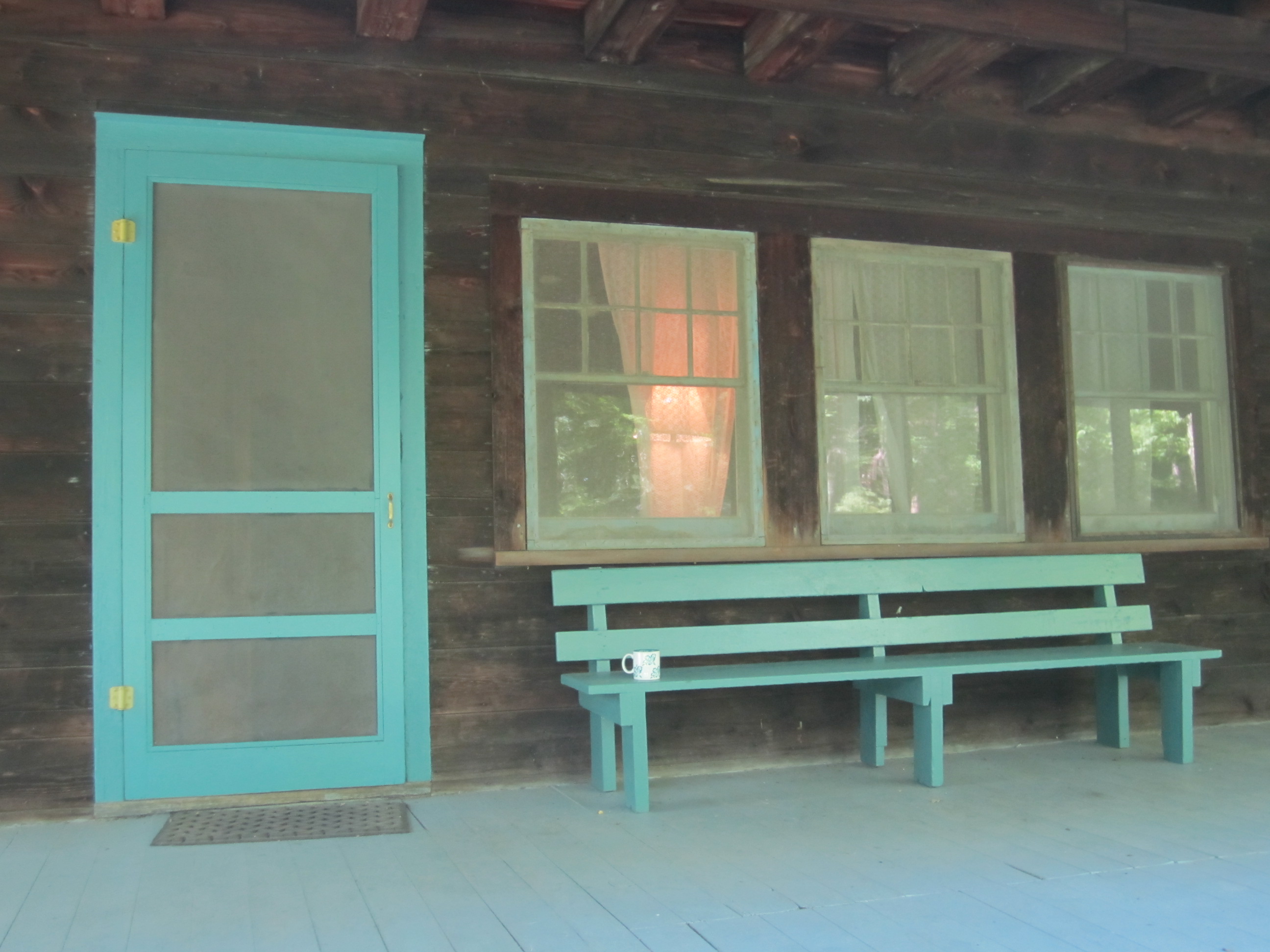
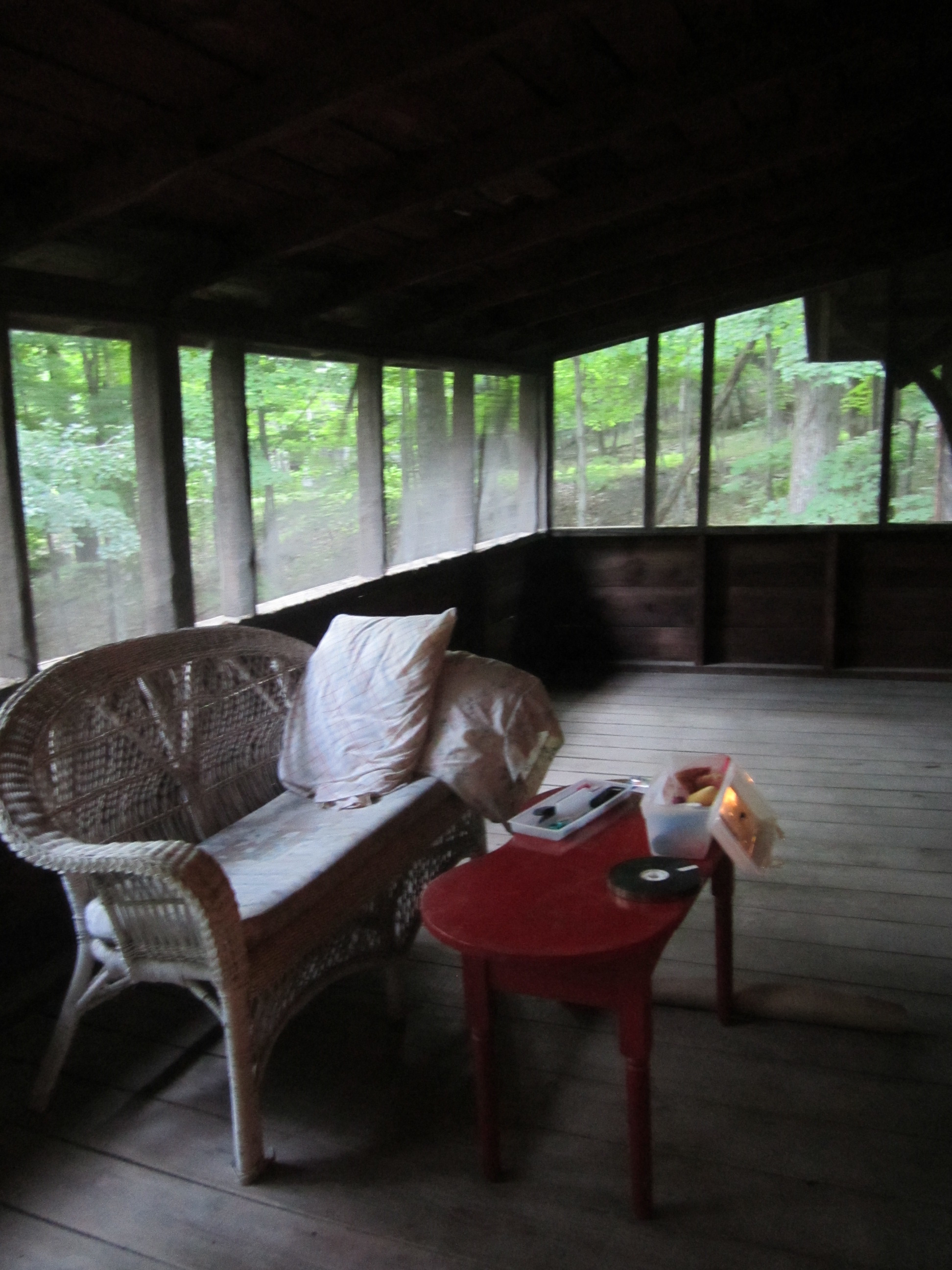
Screen porch artist studio

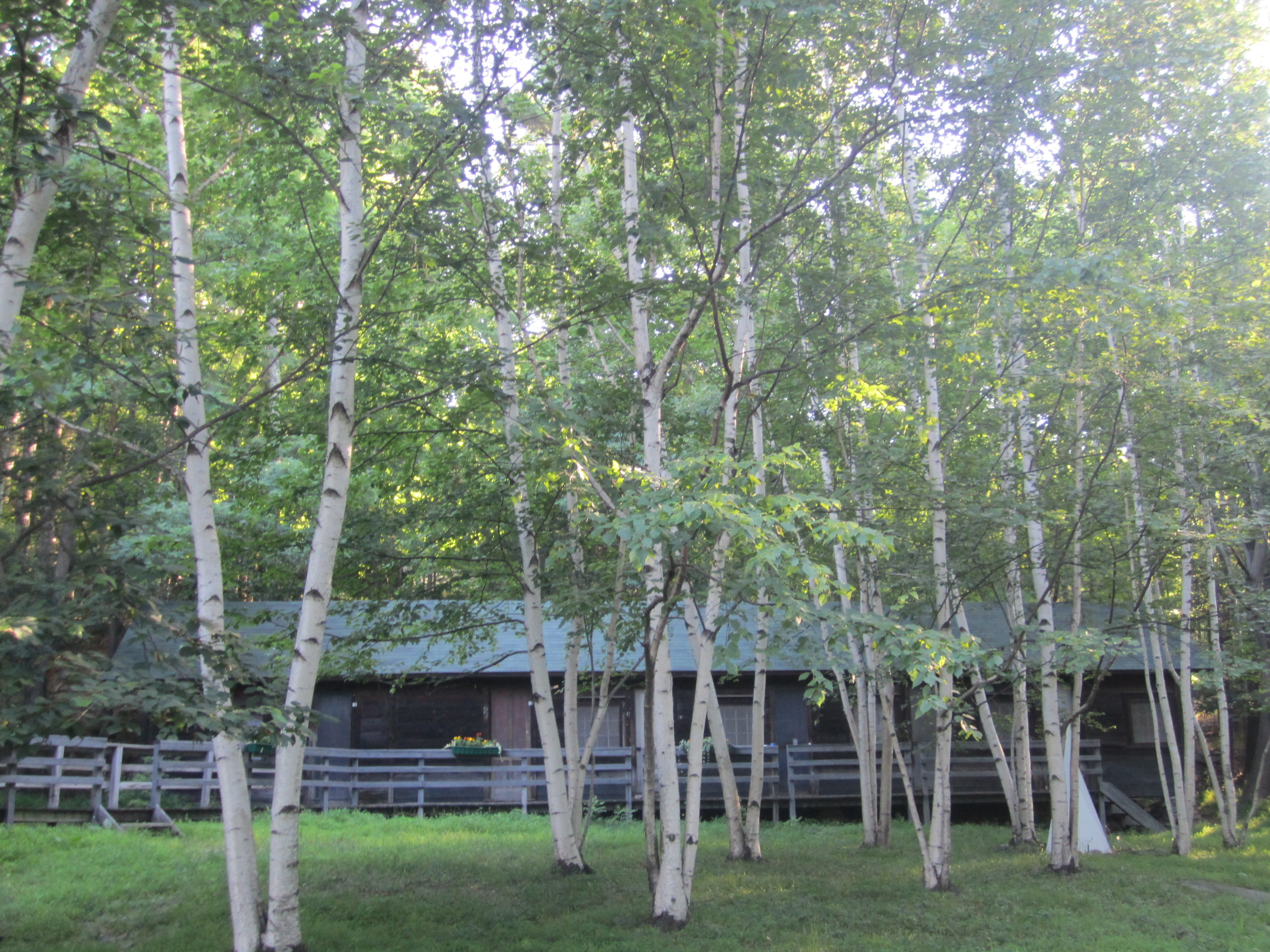
Artist studios behind the birch trees

As I become more deeply a New Yorker I savor more wholly the opportunities to get out of the city and to immerse myself in rural experiences. Byrdcliffe provides a place for retreat from the pressing concerns of modern, urban life, which is what the Arts and Crafts Movement focused on. There one can concentrate on creativity and artistic exploration in the midst of small town life and natural beauty. In what I think is becoming a resounding theme of my visits to Northeast artist residencies: I can’t wait to go back.

Mt. Guardian trail

Flying (and Photographing) Above the Clouds

A shot from the sky over New England

If you follow me on Twitter or Flickr you are probably aware that my latest technological obsession is the app Instagram. It allows you to take, share and comment on photos with your iPhone, as well as add filters to them that make them look a little better than the average smart phone snap. What I love about Instagram is that it connects me to a network of friends and strangers around the world who share postcard moments of their daily lives. It’s pure visual pleasure (on a small screen) that allows members to share the stories of their lives through photo vignettes.

Flying Above the Clouds IV

Above the clouds

On my Instagram feed my visual obsessions become quickly apparent: there is a high quantity of images of clouds, sunsets, sky, cats, coffee, food, Paris and New York. Looking at so many shots of sky from around the world inspired me to snap a few pictures using my iPhone (I used Camera Plus and Hipstamatic) while I was on my puddle jumper of a flight up to Maine yesterday. I loved the distortion of the sun and sky provided naturally by the airplane window and the textures of the clouds. It also reminded me of the song “Clouds” that my band Corita wrote – shimmery, sing songy, dreamy and noisy. You can listen to it and download it here. Enjoy!

Sunburst

Atmosphere

Flying Above the Clouds

Sky, sun, clouds, faraway lakes

Greetings from Asbury Park (Well, Ocean Grove)

Asbury Park boardwalk at dusk

Ocean Grove at sunset

For the past few days I have been close to home, but faraway. I rented a small apartment with two of my good friends “down the shore” in New Jersey, a tranquil, two-hour train ride from Penn Station, but only a block’s walk from the beach and long from the crush of daily city life. I recently switched jobs and found out that I had to use up three days of vacation before the end of June. I called my friend L.J., who I have gone on adventures to Central Europe and Iceland with. Did she want to go somewhere for five days? Somewhere cheap and last minute? Yes! We dreamed of getting a super steal of a deal in the Caribbean, of jetting off to a quiet island for $300 apiece like the advertisements in the back of the New York Times travel section promise. However, after much research on every travel site we could find we found the deals to be far beyond our price range. We were depressed for a few instants, but then turned our sights to something closer. What did we want? Sun, sand and easy living that won’t strain our wallets. Why not the beaches of Long Island or New Jersey? We visit these beaches regularly on summer-weekend day trips and there’s no lack of cute towns. A little more research and we found our rental, in a historic community called Ocean Grove, right next to the storied Asbury Park.

Ocean Grove street at dusk

Nagle's, Main Ave, Ocean Grove

Ocean Grove is incredibly charming and full of historic, multi-colored, well-maintained Victorian summer homes. On Main Avenue is Nagle’s, a pharmacy and classic soda fountain turned restaurant where we had a burger our first night and a daily ice cream. The beach is popular without being swarmed and the boardwalk is well maintained. This is a long way from the hair gel, fist pumps and sleaze that has popularized by a certain television show. However, one thing we neglected to find out about Ocean Grove, is that it is owned by the evangelical Church. There’s regular worship services on the boardwalk, there’s a posting about daily scripture, you can’t go onto the beach before 12:30 on Sundays because you are supposed to be in church, and forget about buying alcohol. The advantage of this is the town is quiet and peaceful, the disadvantage that if you are made uncomfortable by rules, religiosity, and the sexism, homophobia and hypocrisy of the church (which we are) it feels a little… creepy.

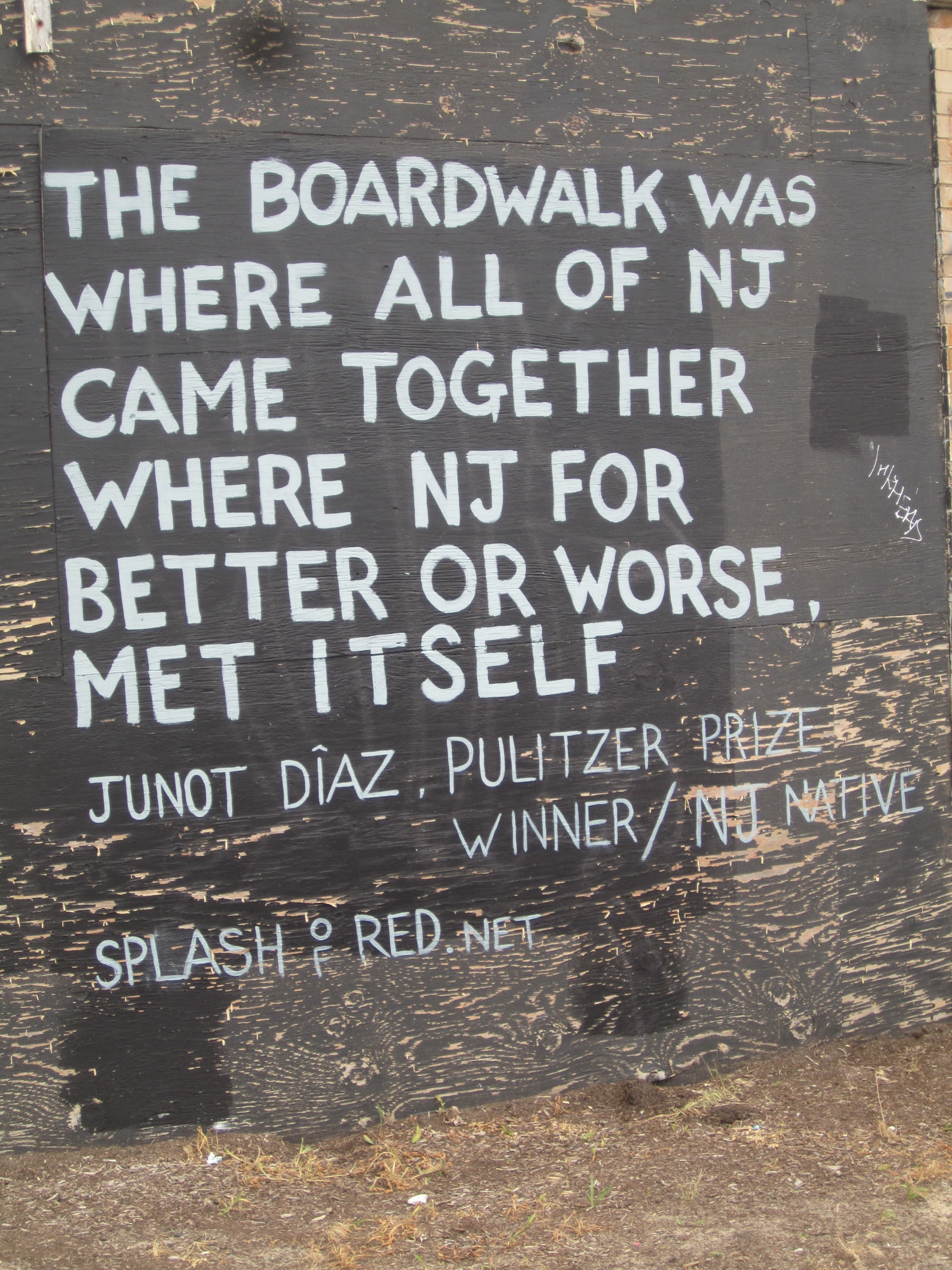
Junot Diaz quote on the Asbury Park boardwalk

Marinere: American Apparel, Levi's shorts ("Mom shorts" found at Tucson Goodwill and cut off to be chique), Bensimon sneakers

Fortunately, not a 10 minute down the boardwalk is “sinful” Asbury Park, home of the Boss, Bruce Springstein, and the Stone Pony, the club where he got his start. The boardwalk pulses with life and on Saturday night you can hear the latest dance pop hits booming out over the water from the recently restored pier. There’s restaurants, bars, mini golf, ice cream stands, and The Silverball Museum, a pinball arcade full of vintage pinball machines where you pay by the hour! There’s also Asbury Lanes, a punk rock club that is also a bowling ally where $22 gets you unlimited bowling and admission to that evening’s show (a little steep for us, but a good deal for bowlers and music lovers).

Shirt: J Crew "Artist" T, Skirt: Brooklyn Industries, Worishofer Sandals, Sunglasses from in God We Trust (hah hah) in Brooklyn

The streets are bikeable and on a morning ride I relished taking deep breaths of the sea air and felt transported by the mixture of  of salt, sunscreen, sand and honeysuckle carried on the breeze. No makeup, no fancy clothes, no plans, just jean shorts, bathing suits, and sunscreen. These days have been like a gift—because they were unexpected there’s no obligation and no expectations put on this time. It’s just mine to read, relax, enjoy my friends, eat simple food and relish a sliver of the good life close to home.

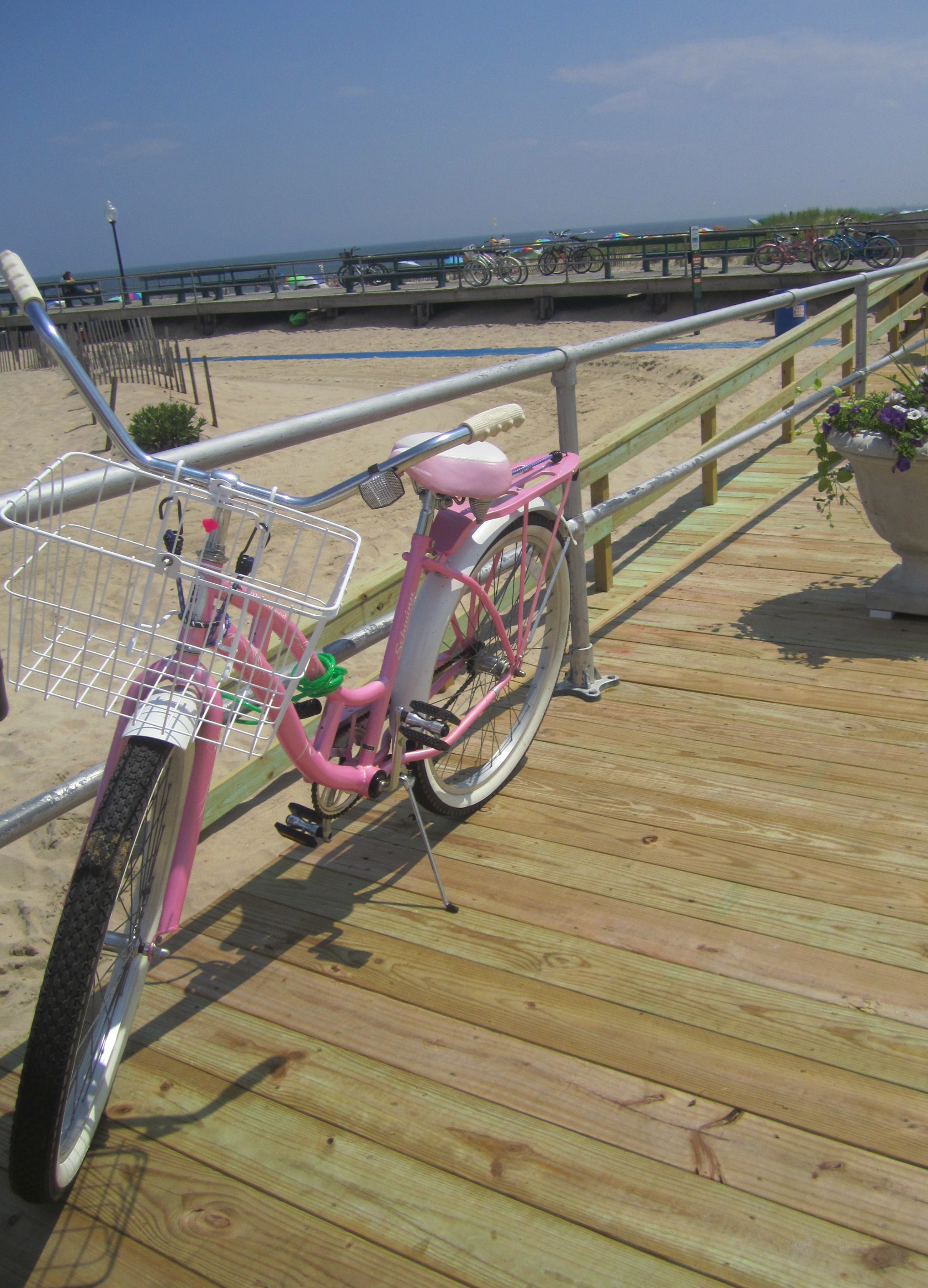
Beach and boardwalk cruiser (not mine, I brought my road bike from Brooklyn)

Strawhat and shorts (cut off by me!) both found in Arizona, Esther Williams bathing suit (love!)

The Utopia Project I: Vermont Studio Center

Red Mill Building, Vermont Studio Center, Johnson, Vermont

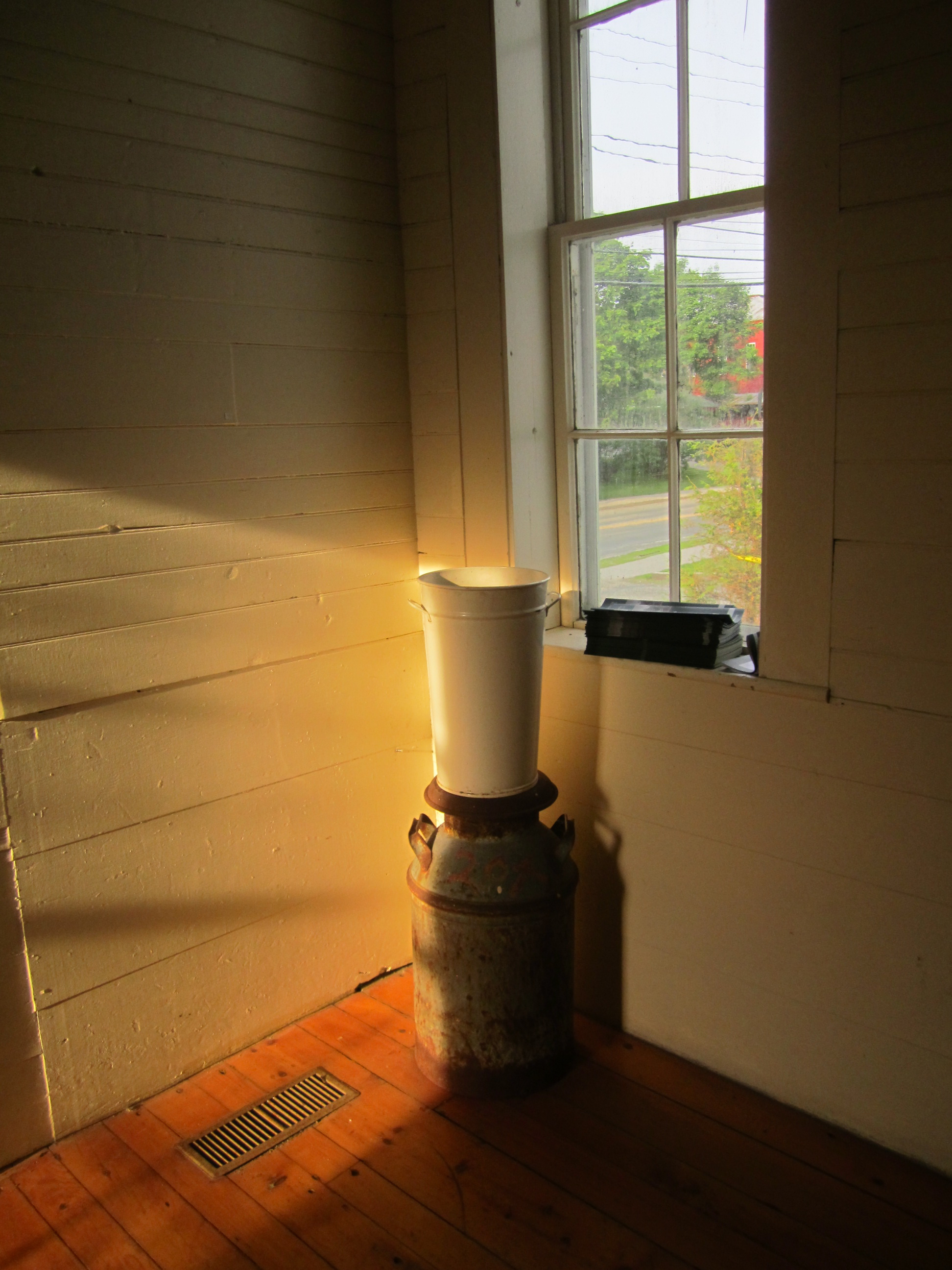
Vermont Studio Center, Writing Studios, Johnson, Vermont

What compels an artist to create art? Is it internal or external? Is it the environment, inspiration from peers and community members, or simply having the space, time and opportunity to work? What environment is most nurturing  to art and what type? Do artists create better in urban centers, buzzing with life, where their daily peregrinations and haphazard meetings can be the source of inspiration? Or do they need peace, quiet, solitude, nature and focus? While I live and work in the first set of circumstances (Brooklyn has the highest per capita of artists of New York’s five boroughs), I’m curious about the second. Specifically, the intentional artist’s community.

Roof of the wood and metal shop, Vermont Studio Center

This summer I am setting out to explore artist residencies, retreats or schools that have consciously built themselves away from urban environments. They are all situated in locations of surprising natural beauty, yet each has a particular history and offers artists a particular experience.

Bird houses, Vermont Studio Center

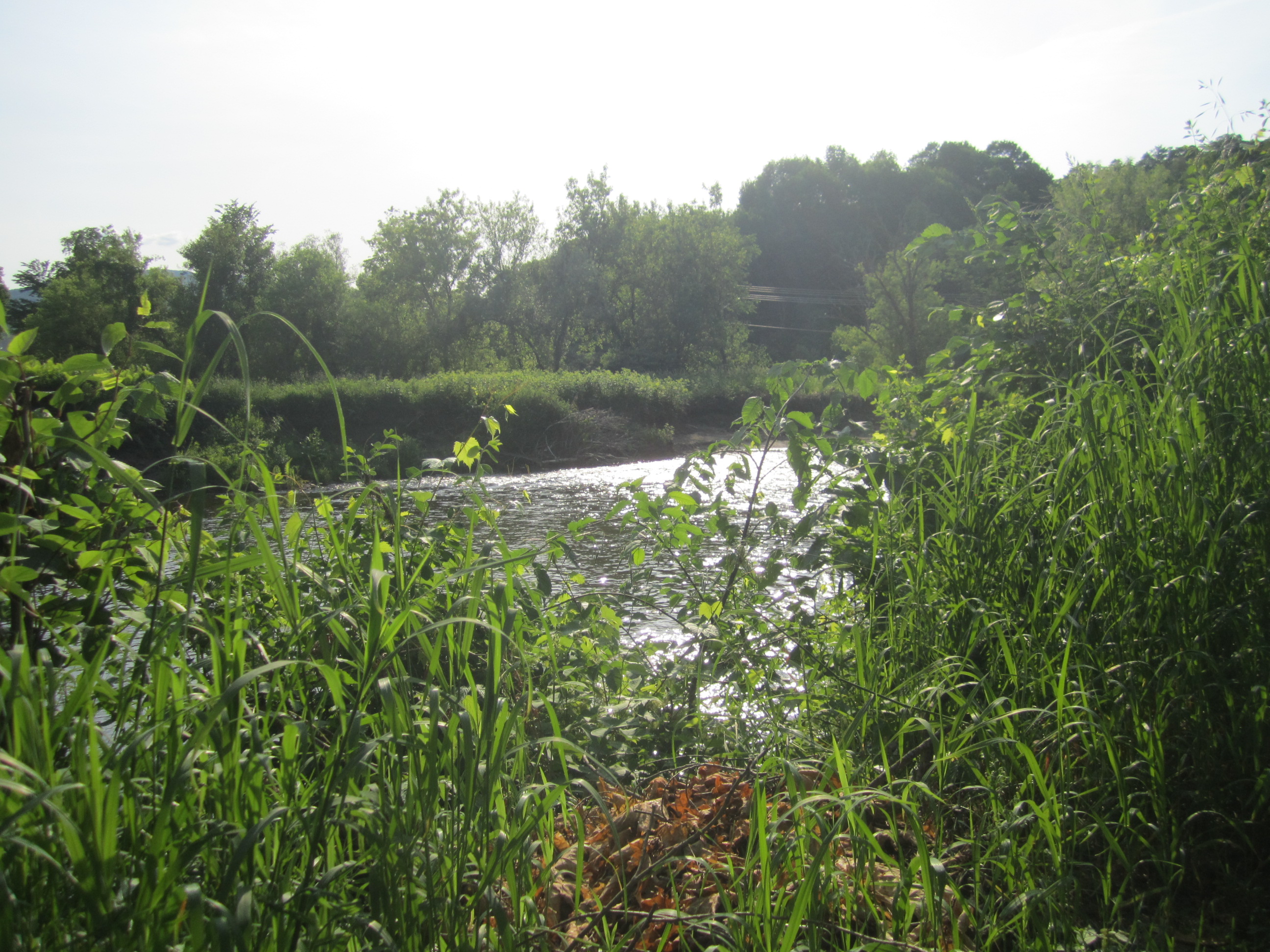
Swimming hole, Johnson Vermont, near the Vermont Studio Center

Places like MacDowell and Byrdcliffe reach back one hundred years or more, while others, like the Vermont Studio Center, reinvent the tradition. This summer I will be traveling to residencies, retreats, art schools and colonies in Vermont, New York State, New Hampshire and Maine, reaching out for work, but documenting these unique places for myself and for this project. I’m searching for insight into artistic inspiration, ideas about what binds an artistic community, and educating myself about an important tradition in the history of making art in the United States.

Deck of the Trustees House, Vermont Studio Center

Old Town Hall, Vermont Studio Center

Old Town Hall, Vermont Studio Center

My first stop was a seven hour drive north of New York City to Johnson, Vermont, which is practically on the Quebec border. I visited the Vermont Studio Center, which is a relative newcomer to the artist residency scene, and was founded by artists in 1984. Housed in a series of old mill buildings, and even the old town hall, the Studio Center integrates with the tiny town of Johnson. The residency itself is very independent—residents, who are visual artists and writers—come together for meals and studio visits, but that’s about it. Otherwise, they work in their studios and many of them work to keep the residency running. The residents themselves are diverse and hail from all parts of the world and are at all stages of their careers as artists. Serious, community oriented, independent, all set in a very tranquil northern landscape of lush hills, rivers and forests. While I’m generally unmoved by northern landscape (having grown up in one), the Vermont Studio Center felt like an escape for me as well. I hope one day to return as a resident.

Sign on the kitchen door, Vermont Studio Center

Inside the Red Mill, Vermont Studio Center

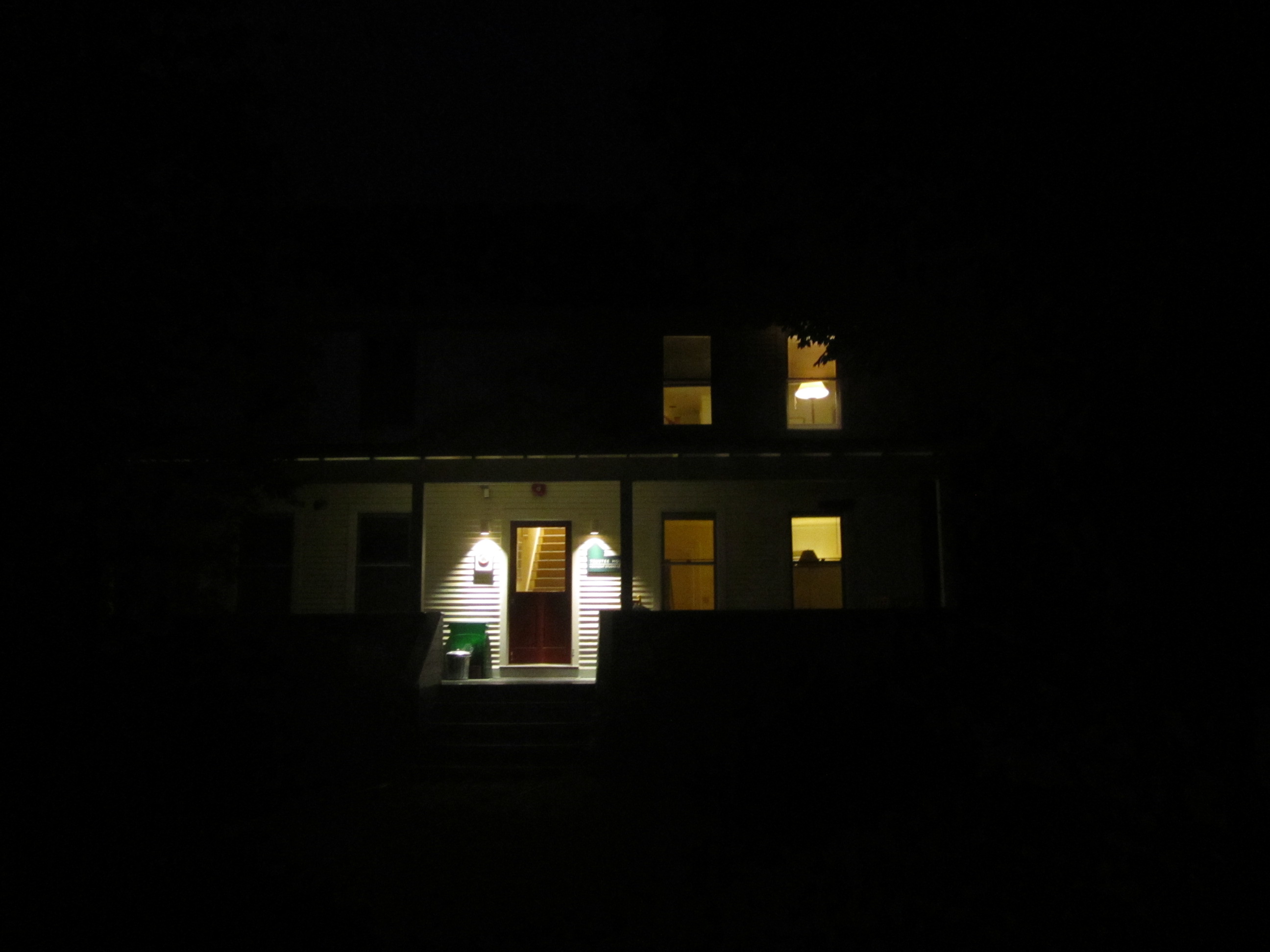
Night, Vermont Studio Center

Girl from the North Country

The other weekend I went “home” to Maine for the wedding of one of my best friends from childhood and to celebrate my birthday with my parents. Like most people I have a complicated relationship with home. My current home is in Brooklyn, New York and probably will be for the foreseeable future (unless someone wants to offer me a job in Paris or London, hint hint). But usually when I refer to “home,” I mean Maine, where I grew up and where my parents still live. When I was a teenager I couldn’t wait to get out of Maine and transform myself into a bohemian urbanite. I am the first to admit I had romantic ideas about what life in the city would be like, and not a lot of idea about the heartache and hard work it would actually entail. As the years that I have lived in New York City go by I become more comfortable with where I am from, but I also don’t feel like I need to flaunt it. Accepting my home is also about accepting who I am and how it has shaped me.

Dressed up for the wedding at Hawk Ridge Farm. Brooklyn Industries dress and sweater, American Apparel tights, Robert Clergerie shoes

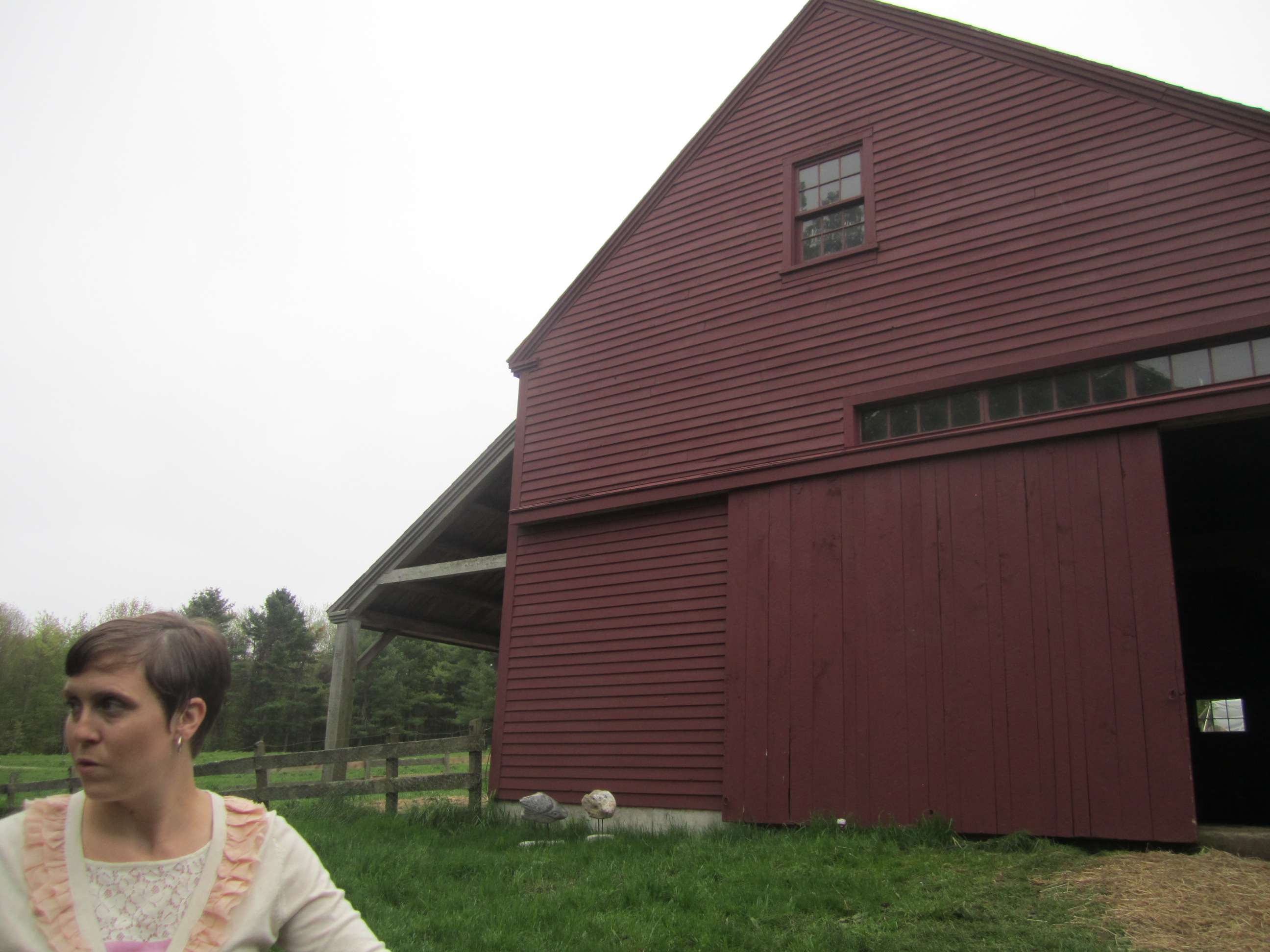
After the ceremony the bride and groom lead us through the pasture to the reception.Of course, being Maine the weather was something to contend with, but we're used to it.

Nola Springtime bag by Les Compasantes (a birthday present to myself), American Apparel marine sweater, Ben Simon sneakers

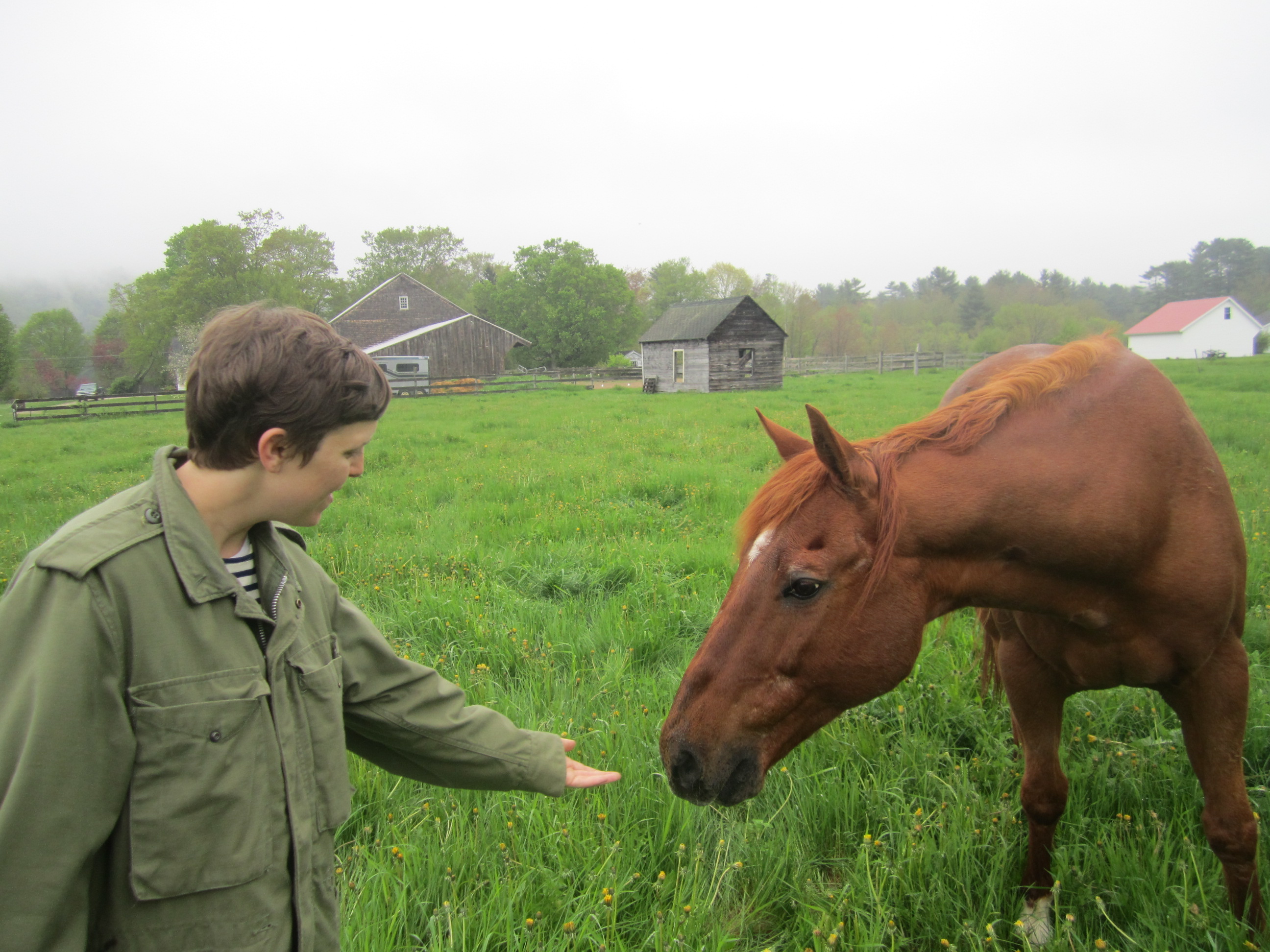
Hanging out with Sonny. I borrowed my Dad's jacket.

On top of Bradbury Mountain, my favorite place to walk when I'm home.

Maine springtime "color block."

Raising (My Opinion of) Arizona

You need a silly sun hat in Arizona
The first tweet I wrote when I landed in Phoenix said, “I hope I don’t get kicked out of Arizona for looking like an immigrant.” Arizona has drawn quite a lot of media scorn for the proposal, which was thankfully defeated, to stop and ID anyone who might look like they were an undocumented immigrant. While there’s a lot of conservative, reactionary politics going on in the United States, Arizona seems like the epicenter of some of the most virulently racist and reactionary policy proposals. Tucson even wants to succeed and form their own state to get away from some of the worst of these policies. However, there’s another side to Arizona. It’s a stark, beautiful, other worldly landscape. There’s a vibrant cultural scene and strong history and everyone I met (who granted were all involved in the arts) were friendly and welcoming and happy to show me another side of Arizona.
Saguaro IDespite being a short flight from Albuquerque, Phoenix felt very different. While Albuquerque quickly receded into the desert, Phoenix’s suburbs sprawled out along palm tree lined avenues. “Who do they think they are, L.A.?” I asked.  I wasn’t sure what I would find, but tucked into Phoenix’s sprawl is a vibrant, growing downtown arts scene. It is anchored by the Alwun House, a historic house that presents exhibits and performances of all kinds and takes an active role in the revitalization of the neighborhood. I tried out Carly’s Bistro, a fresh, local culinary establishment that’s open late serving good food and cocktails with a rock and roll feel. Try the whiskey sangria!

Whiskey Sangria

Whiskey sangria at Carly's Bistro

Across the river from Phoenix in Tempe is the gleaming Tempe Center for the Arts that presents performing and visual arts, as well as art education programs. During an opening for their exhibition Twenty Questions I even met the grand daughter of the man who founded Tempe – that just shows how new towns and cities in the west are compared to the east.

Geometric Patterns

Artwork in the Twenty Questions exhibition

I didn’t stay in Phoenix long, however, and after a fruitless morning of trying to buy sun hat (are these people in denial they live in the desert or what?) I headed down to the Saguaro National Forest and then to Tucson. I first stopped at the Arizona-Sonora Desert Museumto look at living exhibits of native desert plants and animals. I loved the chance to see coyotes, javalinas (they look like wild boars) and a very sleepy brown bear up close, but if you are looking for desert walking I would skip the Desert Museum and go straight to the Saguaro National Forest.

Do not feed the coyotes

Sign at the Desert Museum

I got there in the afternoon and was happily surprised to find out the park was free thanks to National Parks Week. I talked with a Ranger who recommended a 3-mile hike to the top of a ridge and gave me this warning, “Since you are unfamiliar with the landscape I will warn you to be careful when you are walking down hill during sunset because you don’t want to step on a rattlesnake.” No thanks, I did not!
Sonoran Desert
New Saguaro GrowthI had never seen a Saguaro cactus up close before and I could not get enough of them! Their arms! Their spines! Like trees, but not at all! So stoic against the elements!
Cacti Flowers II
Self Portrait with SunhatAfter a few hours of wandering around among the Saguaros I drove into Tucson and checked into the Hotel Arizona. I had a corner room and could see the sunset over Grant’s Pass.
The sunset from my room at Hotel Arizona
However, it was Easter Sunday and I was worried, where would I find anything to eat that wasn’t a chain restaurant in downtown Tucson? I asked the teenage front desk clerk and he suggested The Grill, “It’s kind of a greasy spoon…” he explained. Sure, why not. I wandered towards where he suggested and found myself face to face with a classic, American diner. It was as if I had dreamed it. Punk rock, queer teen waiter, great menu, perfect vinyl covered booths, and a hamburger that tasted like it had been homemade, not pulled out of a freezer. Did I mention it was open 24 hours?
Perfect American diner in Tucson.I felt like I had been transported into an issue of Puberty Strike zine, published by Seth Bogartin the 1990’s and extoling the virtues and vices of teenage life in Tucson. The Grill felt surely like the place the coolest teens in town would hang out. But now that I’m an adult I needed a drink after all my wandering in the desert. “Do you have a bar?” I asked the waiter, a little desperate because I had seen the hotel bar close at 7:30. “We have a great bar next door, they open at eight.” Was I dreaming?

Death in the Afternoon

Death in the Afternoon at the Red Room

After I finished the best hamburger I’ve eaten besides those that SMH makes me I wandered over to the bar. Now I was really dreaming. The Red Room, the bar attached to The Grill has a menu of carefully selected Belgian beers and American microbrews. As I sipped on a perfect blonde ale from Belgium I noticed cocktail making accouterments. “You make cocktails too?” I asked the bartender, “What are the drinks you like making lately?” Once I finished my beer I ordered one that he suggested, the Death in the Afternoon, a mixture of Absinthe, champagne, bitters and soda water, garnished with freshly picked Borage flowers. For $6! I laughed as I paid him, saying, “I live in New York and there this would cost $12!” “No,” he said, “I was just there, it was $14!”

Bicas Tools

Tools at Bicas

The next day I was treated to a walking tour of Tucson’s rail yards gallery and studio district. I really liked discovering art and radical community projects such as Bicas, a bike recycling and education center, and the Citizens Art collective. I also got to drop in on the intense universe of Mat Bevel, who makes immersive kinetic sculptures out of found objects. When all the sculptures were activated his studio and gallery space was cacophonous and transporting. We also dropped in on Santa Theresa Tile Works, who make gorgeous hand made ceramic tiles, and and Raices Taller, a nonprofit community gallery focused on the Latino/a community (but not only).

Bevel Kinetic Sculptures

Bevel Kinetic Institute

After all that inspiration I was also able to fit in a little bit of thrift store shopping at a richly endowed and modestly priced Goodwill. I don’t even both with the Goodwill stores in NYC, but I knew this one wouldn’t be so picked over. I scored two skirts, a pair of light wash Levi jean shorts that will either be my best fashion addition for the summer or a huge mistake, and a work-appropriate button shirt, all for $20! I also popped into Preen, a beautiful vintage shop that also sells records by local bands and some local fashions. I picked up a vintage Vera scarf that reminded me of a 60’s flight attendant uniform in a good way.

Tel*e*gram and reflection

You need a parasol to sheild you from Tucson's strong sun

Street Art Zebra, Tucson, AZ

Street art Zebra in Tucson's rail yards

Finally, to cool off from all the shopping I caught a drink at the lovingly restored Hotel Congress, where I could have stayed all afternoon if I didn’t have to work! Since Tucson was the last stop on my southwest tour I celebrated with a fancy dinner and cocktail at 47 Scott. My drink was infused with sage, which felt like a fitting tribute to the end of an inspiring journey through a (previously) unknown land.

Vagbond Cocktail, Salad

Vagabond cocktail and dinner, 47 Scott

There’s more Arizona on my Flickr stream.