Enchanted by the Land of Enchantment

Abiquiu Scenic IIIf I was disoriented in Colorado, then New Mexico felt like a whole other country. It actually was another country until it was ceded to the US in 1850, but beyond history, it struck me as being somewhere else entirely. With all the debates raging over who and who is not American and who should be here or not I think it’s important to remember that borders are politically imagined constructs that change over time. Spanish and Native American languages here are more “native” than English. Streets and towns are named in Spanish. Since getting off the plane in Albuquerque felt like stepping into a new dimension I felt comfortable with the state’s tagline as the “Land of Enchantment.”
Abiquiu Scenic VIIIFor three days I bounced between Albuquerque and Santa Fe. I stayed in Santa Fe at a lovely inn on the commercial strip of Cerillos road. While mostly I would hate the strip mall nature of the road (yes, there are tons of chain stores), I also grew to love it. It is the main artery towards town and where you’ll find anything you need at almost any hour of the day. I even bought some Essie nail polish in pastel shades late at night at the Walgreens.

Windblown in New Mexico

Windswept in New Mexico

IAIA

Institute of American Indian Arts

I also was delighted to get out of town a little and visit the Institute for American Indian Arts(or IAIA), which has a new campus and a great art school. It seems everything a college should be – community oriented, cultural respectful, forward looking, fun and in a beautiful location.

Ruth Claxton at SITE Santa Fe

Ruth Claxton's site-specific installation at SITE Santa Fe

I also visited SITE Santa Fe, which is a very exciting contemporary art center. While Santa Fe is known more for “traditional” arts and crafts (as well as tourist arts) there is a very vibrant contemporary art scene. Many prominent artists who defined experimental art in the 20th century live in Santa Fe and their influence shows. SITE is doing a lot to promote contemporary art in the Santa Fe community (and beyond) and while I was there had an excellent show of Amy Cutler’s work, as well as a room sized installation by Ruth Claxton that was fabricated, well, on site.

St. Francis Hotel Lobby

Southwestern religious art in the lobby of the St. Francis Hotel

Negroni by the Fire

Negroni by the fireside at the St. Francis Hotel

Santa Fe is also a great food town, which I wrote about on 2 cooks. I also was lucky enough to connect with an New York friend who was also in town and we got fancy cocktails at the Hotel St. Francis and not so fancy cocktails (but served with a straw, classy!) at The Matador, the most excellent (and perhaps only) punk rock dive bar in town. Awesome punk rock tunes were being spun. The bartender was friendly. Thank goodness we had a friend living in Santa Fe to show us it was there.

At the fountail

In the lobby of the St. Francis Hotel

My most enchanting New Mexico experience, however, came when I drove one hour north of Santa Fe. I drove towards Los Alamos before turning off to the small town of Abiquiu. This is where Georgia O’Keefe lived, but I was visiting the contemporary artist Sabra Moore, who has made her home on top of a mesa with her partner Roger. I drove over a cattle guard and along a twisting, steep, narrow dirt road, inching my rental car over washed out areas.

Abiquiu Scenic III

View down the arroyo in Abiquiu

Abiquiu Scenic VI

Abiquiu, New Mexico

After I arrived we walked through the arroyo near her adobe house and straw bale studio as the light turned from gold to red and the evening approached.  She told me about the history of town and she and Roger pointed out the ancient petroglyphs carved into the canyon walls.

Abiquiu Petroglyphs

Petroglyph on the arroyo wall in Abiquiu, New Mexico

Taking in the landscape as day faded into night, witnessing evidence of a civilization older than I can reliably imagine, and hearing about two artists’ lives, I thought about how this was a moment in my life that will never be replicated. Though I hope to, I may never return to this place, but, like most places that strike us, I will keep it with me. After a delicious dinner made out of local produce and inspired by local food traditions I stared up up at the stars, which at 7,000 feet and away from city lights, looked considerably closer than usual. I was filled with gratitude and allowed myself to let go of questions, doubts, and angst that had been nagging at me all week. I dared to let myself be filled with a deep sense of peace. Maybe there really is something about the “land of enchantment.”

Abiquiu Scenic XIII

Evening, Abiquiu, New Mexico

There’s even more New Mexico on my flickr stream.

In The Mile High City, Just Barely

Red Rocks Recreation Area

View of Pike's Peak outside of Manitou Springs

If you know me, or have been reading my blog for awhile, you know I have a complicated and somewhat fraught relationship to this country where I was born and live. I often am in the midst of plotting how I can leave and have at times created an identity, look and approach to life based on imagining I live in another country (most likely a francophone country in Western Europe). When my early morning flight touched down at the Denver International Airport the other week I had a hard time recognizing where I was. I’ve been to the West before (I have family in Wyoming and spent my childhood summers going out there to visit them), but it’s been awhile. As I sat on the shuttle to my rental car I looked slackjawed at the plains colliding with the rocky mountains. I felt like I’d been dropped into a very different place that was nowhere like where I’m from. So despite my skepticism about the United States I had to admit – this landscape was pretty majestic.

"Work It!"

In the Garden of the Gods, Colorado Springs

The breathtaking sense of awe for the landscape I felt was only intensified when I drove to Colorado Springs that afternoon and took a walk through the Garden of the Gods, a formation of jutting red rocks just outside of town. They are so named because some early settlers from the East Coast thought that it would be a good place for a beer garden! I was also rudely reminded to heed the warnings that I had been issued as someone who lives at sea level – my energetic walk around the rocks caused a real bought of altitude sickness, a form of dizzy exhaustion that I do not want to feel again.

Tofu at Adam's Mountain Cafe

Tofu at Adam's Mountain Cafe, Manitou Springs

Black Cat Books Typewriter

The window at Back Cat Books, Manitou Springs

The next day I reminded myself to walk slowly while I visited the Business of Art Center and explored the small town of Manitou Springs, whose main street is lined with mineral water springs that you can drink from. I had lunch at Adam’s Mountain Cafe, which is located in an old spa building right along the creek that runs through town, and peered in the windows of the cute shops along the street. Manitou Springs is right at the base of Pike’s Peak and full of good places to eat and even an old school arcade right in the center of town.

Denver Union Station

Downtown Denver, Union Station

I only got to spend one very short evening in Denver, but it was lovely. First I visited the wonderful gallery, reading room, education center and artist residency at RedLine. I tried a local Colorado red wine and fried blue cheese balls (decadent!) at The Lobby, a homey bar and restaurant just down the street from RedLine. I finished my evening with a drink at the Cruise Room, a classy cocktail bar that looks like the inside of a cruise ship which reportedly opened the day after prohibition ended and is located at the very classic Oxford Hotel where I was staying. The hotel even gives you a fluffy bathrobe with your room! Colorado may not at all be like where I’m from, but I loved being there.

Sipping and reading in Denver style.

Sipping and reading at the Cruise Room

Want more Colorado? On my Flickr stream!

A Place in the Sun

Palm

View of White Bay beach through a palm leaf

As an earnest liberal arts undergrad I studied “Race, Ethnicity, and Postcolonial Studies” as part of my degree. As a result, I thought of the Caribbean as a place with an enduring legacy of slavery, a proud history of anti-colonial struggle, and a place where identities, cultures, and ethnicities overlap and intermix to create “hybrid” identities (a favorite term in the 90’s, I hear its less in favor in the academy now). I saw the Caribbean as a multitude of nations of which people are immensely proud, immensely tied to the island they come from, and immensely skeptical, especially as demonstrated by the huge, and famous, West Indian Labor Day parade that takes place here in Brooklyn. All that to say that I really never saw the Caribbean as a place to go on vacation. However, last winter I had had it with the cold, snow and slush and decided that there had to be a better way than suffering through it all. So when the opportunity came this winter to go somewhere sunny for a 5-day getaway I thought, “Hmmm…”

View of Ivan's Stress Free Bar
Ivan’s Stress Free Bar

SMH had some friends who lived on St. Thomas for several years who recommended a place on a beach on some island near there with an honor bar.  That sounded promising. When we inquired further they told us about Ivan’s Stress Free Bar, which is part of Ivan’s Stress Free Resort on White Bay on the island of Jost Van Dyke, part of the British Virgin Islands. Jost Van Dyke is named for a Dutch pirate, and White Bay has been voted one of the top 10 beaches in the Caribbean by some travel magazine or another, and I believe it. Even better, cabins (really a sturdy plywood shack with pastel colors with a bed, mini fridge and window screens and perhaps a porch) were $75 a night in the high season, a price you would find hard to beat anywhere in the Caribbean. So I booked us a cabin at Ivan’s, figured out how to get to Jost Van Dyke, and decided to not plan any further.

White Bay, Jost Van Dyke

White Bay, Jost Van Dyke

Before I wax poetic about how much I loved it let me tell you: This is not the place to come if you want to go clubbing, indulge in luxury duty-free shopping, swim with dolphins, get a spa treatment or do yoga on the beach. This is not the place to come if you are upset by occasionally sharing space with (small) ants, or mind getting sand everywhere, or insist on a hot shower. However, if you are looking for a slice of paradise right here on earth with soft white sand, crystaline blue water, palm trees and a bar where you can order the perfect tropical cocktail with coconut, orange juice, pineapple juice, run and fresh nutmeg called the “Painkiller” from some of the nicest people you will meet, and not have to rub elbows with loads of offensive tourists, this place if for you.

Arawak Cabin

Our cabin at Ivan's Stress Free Resort

After we called to make our reservation at Ivan’s (I highly recommend calling) we found out that it had been featured in an article by the (former) Frugal Traveler in the New York Times in 2006. Little has changed since then, although now Ivan’s usually employs a bartender (most evenings its Dorian, who is also a cricket player for the BVI’s team -amazing) instead of being fully a mix-it-yourself kind of place.

Ivan's Stress Free Bar II

Ivan's Stress Free Bar Interior


Looking to where we need to go
Hiking the spine of Jost Van Dyke and ascending 0 to 1,000 feet above sea level very quickly! Those white dots are goats on the path.

Despite our avoiding planning too heavily we found plenty to do, and struck a perfect balance between sitting on the beach and reading and exploring the island. This island is small.  You can walk over the steep hills in to town, which had a sand main street, and go to Foxy’s, which might be the most famous bar in the British Virgin Islands. Jost Van Dyke is quiet island which is about 4 miles long and inhabited by more goats than people, which we encountered when we took a grueling, then revelatory, hike along  the spine of the island. The hike, rumored to be among the best in the Caribbean, revealed glittering views of the the ocean and Tortola and St. John.

Great Harbor from Above
Jost Van Dyke Great Harbor from above. St. John in the background.
Watching the waves in the bubbly pool

Bubbly Pool, Jost Van Dyke

We ended our hike in the bubbly pool, which is like a natural hot tub refilled by crashing ocean waves and then a meal at Foxy’s Taboo, a bar and restaurant owned by Foxy (and named for his big black dog Taboo) on the far side of the island. We later met Foxy briefly on the main dock in town scaling freshly caught fish on his fishing boat and when we told him we lived in Brooklyn he smiled and said, “I gotta get up there to Play Mas sometime.”

Norman Island Caves

Norman Island and the caves that inspired Robert Louis Stevenson

We also took a day long snorkeling trip with BVI Eco Tours, where an amazingly nice group of Aussie and Californian surfer dudes served as our guides and captain. It was an incredible 6 hour long adventure for a very cheap price and included a stop for lunch at Pirate’s Bight on the otherwise uninhabited Norman island. On Norman island we also go to snorkel into caves that reportedly inspired Robert Lewis Stevenson’s Treasure Island. At the end of the day they mixed us up some rum punch on board our boat, which was the perfect way to end the day after swimming in the beautiful water. We also rented snorkel gear for 4 days from the same place, which was great.

Jost Van Dyke Main Street

Jost Van Dyke Main Street

Food is not cheap on the islands so we tried to minimize how much we ate out by cooking out own. We brought a bunch of dried, canned food, but what we quickly learned in the campground communal cookstove lacked the oomph we take for granted from our stove at home. In the future we will bring plenty of heat and serve food. However, on the night we arrived it was Ivan’s Thursday night barbeque.  We splurged and at $25 each got heaping servings of rice, pasta, salad, barbeque ribs, fish, and chicken. That is a lot of money for food in the states, but keep in mind that everything has to boated in to the island.

The Good Life on White Bay

The good life on White Bay

As different of a setting as it is, Jost Van Dyke reminded me of the islands off the coast of Maine like North Haven and Monhegan where I used to go for a few days in the summer to visit friends. As a necessity you have to live lightly on the land there and you can’t take any resource for granted. The towns are small and after a few days everyone waves at you as you walk around. It was the same on Jost. Our waiter from Foxy’s Taboo, who also turned out to be the custom’s officer, remembered us while we were waiting at the ferry dock. On Jost, like the island in Maine, while it’s clear who’s an outsider and who’s a local no one is made to feel unwelcome if you are respectful of the place and the culture and don’t act like an invading horde.

West End Harbor, Tortola

West End Harbor, Tortola

Getting to Jost Van Dyke is simple, but not always quick. We flew into St. Thomas (in the USVI), took a ferry to West End in Tortola, where we cleared Her Majesty’s Customs and Immigration, and then took another ferry to Jost. All worked smoothly, but going back to St. Thomas  a ferry that was supposed to take us to there via St. John was an hour late, which caused a bunch of fretting and nail biting on my part because I was worried we would miss our flight. We didn’t, but next time will take a cue from another couple who were headed home. They booked a night in a Best Western on St. Thomas near the airport (and right on the beach) so they had a day cushion and didn’t need to worry about how late the ferry was.

Sunset Looking West from Jost Van Dyke

Sunset Hike, Jost Van Dyke

Writing this in Brooklyn it’s hard to imagine that perfect beach, balmy breeze, soft sand, azure water, and the sound of waves crashing on the beach as we slept in a pastel colored cabin were real, but it’s right down there, just a flight and two boat rides away, paradise attained, even for a skeptic like me.

White Bay Light IV

White Bay in the late afternoon

Baltimore Charm City, Hon

The other times I had been to Baltimore was when the Chinatown bus I was taking to one DC protest or punk rock event or another stopped there, usually under a freeway overpass, to let off or pick up a few stragglers.  From that vantage point the city looked very much like “The Wire.” I had met some good friends from there who were fiercely loyal and proud of their city. I had heard that it was a great place for artists, but I had never been. So, I went (for work). Here’s what I found:

Baltimore Penn Sation Awning

Art Noveau Awning at Penn Station

Balitmore Row Houses

Victorian rowhouses with eye catching pop art paint jobs

Bloody Mary and Crab Soup

The ultimate Bloody Mary, topped with Old Bay seasoning, and crab soup at Mama's on the Half Shell

THis is Mama's on the Half Shell

Mama's on the Half Shell, recommended by a Baltimore native!

Weird Baltimore's Patron Saint

Weird Baltimore's patron saint John Waters in the window of Killer Trash

Arty Coffee at Spro

Blue Ally

Allyways, bright paint, low-rise, historic brick houses

Between work I spent time walking through the Charm City, learning about how the historic neighborhood of Fells Point was saved from demolition for a highway project by community organizing, doing homework in the cafe at MICA and remembering being in college, checking out the Creative Alliance and all the things they have going on, scoured a few choice vintage stores, browsed handmade goods at the Woman’s Industrial Exchange (Etsy invented nothing), picked up a Juliet Greco record at Own Guru Records (where they had a cute store cat), and enjoyed a Belgian style brew at the Brewers Art. If you don’t feel like walking there’s a free bus service that covers downtown called the Charm City Circulator. And I even got “Hon’ed” several times, as in, “Hon, do you know where there’s a sub shop around here?” I did not, but I loved that a. I was called “hon” and b. sandwiches were “subs.” I didn’t even set foot in one museum! Baltimore, I will be back!


Winter Weekend Getaway

Growing up in Maine I looked forward to winter. I couldn’t wait for the pond to freeze to skating, the first snow that was enough to go skiing, and days inside baking and drinking hot chocolate. While my enthusiasm for winter has faded a little, mostly because it just seems to drag on a few months too long, I’m not a winter hater. However, every year I feel like I have to come up with new strategies to make the winter enjoyable, and go a little faster. When M. suggested a group getaway with some research and advice from friends we found the perfect solution: a weekend rental chalet in Woodstock, New York complete with a hot tub. Sold.

Overloo</p

Walking up the snowy Overlook trail

After a month exchanging a flurry of emails a group of 14 of us had planned a menu and a spate of activities. The best part of going out of town in the winter is that you don’t have to do anything. And we didn’t. The Woodstock chalet was an invitation to step out of our daily routine immerse ourselves in the secret world of the weekend. A curated selection of bad movies opened the weekend, followed by board  and classic NES games, cooking, hot tub soaking, and a walk up a mountain that some took all the way and others just enough to soak in the snow, quiet, and wind in the trees.

Chalet

Chalet Interior

It’s been a little hard to come back, because the weekend seems to be its own world with its own rhythms. But I think a tradition has been started and I’m already looking forward to next winter! There’s more pictures on Flickr.

Stew, Bloody Mary, Banana Grams!

Chalet Life: Homemade stew, bloody mary, Banana Grams

Winter Footwear

Trial run of Vivienne Westwood Anglomania for Melissa spakly galoshes


Detroit Art City

When I told people that I was traveling to Detroit for the weekend for work the reactions were polarized. I either got, “Detroit, why?” or, ” Detroit, awesome! I’m so jealous!” Sure, Eastern Michigan would not be my number one pick for a winter getaway, but I didn’t quite understand the disdain for the motor city (though I wasn’t sure why people were jealous either). Yes, it’s been through some hard times, but as savvy observers have noted, it’s undergoing a bit of a renaissance as well. So, it was with open minds and open eyes that we headed off.

A piece at the Heidelberg Project, Detroit

The first thing I noticed was the utter lack of density. As we drove around on Sunday morning I felt often like I was driving through the struggling mill towns of Western Maine. “How did this happen?,” I asked one of our hosts. “Poor city planning,” she replied. Basically, the city was designed for masses of people who never came. But Detroit is not an empty wasteland. Far from it. Detroit artists are currently debating whether “ruin porn” is the best way to show the plight of the city (and incite action). I admit that we didn’t leave without seeing the abandoned Michigan Central Station, which has become a symbol for the city’s decline, and, hopefully, will become a symbol for its renewal if it does get restored, perhaps as a hub for high speed rail?

Michigan Central Station

Michigan Central Station, Detroit

Detroit is a hub for art and culture that has been getting a lot of attention lately. We were sure to check out the Heidelberg Project, where the artist Tyree Guyton has decorated an entire street (and surrounding area) and made it into a “folk art” or “outsider art” or “contemporary art” destination instead of a locus of decay and despair. I loved the project for its political nature and also the fact that there was always more to look at – that’s what makes great art, you always see and feel something new as you continue to look.

Heidelberg Street, Sunday Morning

Heidelberg Street, Sunday Morning, Detroit

We spent a whole Saturday afternoon with the Kresge artist fellows, a group of literary and performing artists who have been given a 1-year fellowship by the Kresge foundation. They were an inspiring, diverse group who are deeply invested in their community, have a sharp analysis of Detroit’s history and current events, and are making profoundly challenging work. They included a double bass player from the currently-on-strike Detroit Symphony Orchestra, a female hip-hop artist who wants to set up a foundation for women rappers, an architect and critic writing a history of the idea of the African American Museum on the Washington Mall, and a host of inspiring poets and others. As one of the artists said, “It’s no longer embarrassing to be from Detroit. I used to hide that I’m from here, but now everyone is interested in what we have going on.”  These artists could teach New Yorkers a thing or two!

Our meeting with the artist fellows was held in the Detroit Historical Society, a beautiful building with lots of engaging, interactive exhibits. I kept taking pictures of all the lovely didactics and also got very excited when I saw real cars in the museum illustrating an assembly line in an auto plant. This is what working in a fine arts museum for years will do to you.

Detroit: Arsenal of Democracy

Detroit: Arsenal of Democracy, didactic at the Detroit Historical Society

After our meeting with the artists we all went to Motor City Brewing to partake in locally brewed beers and artisanal pizza. I flinched a little when we ordered the “Ghettoblaster” beer, but wow, the flavor!

Motor City Brewing Menu

Motor City Brewing Menu

We also made it to the Detroit Institute of Arts and took in a photo show of an amazing Hungarian/French/American photographer Andre Kertesz, to the boutique Goods that features lots of hip, Michigan made crafts, and for lunch at Good Girls Go to Paris Crepes.

The Thinker

Detroit Institute of Arts

We missed the Motown Museum (not open on Sundays! Heartbreak!) and Slows Bar BQ. That just means we’ll have to go back. I’m already planning another work trip in the fall.

What does a girl do in Paris that she doesn't do at home?

Poster in Good Girls Go To Paris Creperie's bathroom, Detroit

And despite my parents’ fears I’d be, “sleeping on the floor of a ramshackle motel,” I was, in fact, sleeping in a restored Victorian mansion that comprised the six-house complex of the Inn on Ferry Street. Featuring an incredibly delicious breakfast, working fire places and free New York Times, I can’t recommend this Inn (and Detroit) enough! Please see my Flickr stream for more pictures!

Carriage House

View of the Carriage House at the Inn on Ferry Street


In Flanders Fields

While the Northeast of the United States is covered in snow and Europe is just recovering from its own snow incidents I am using the time given to me by the blizzard and a canceled flight to catch up and take you back to my trip last month to France and Belgium. During my visit to Belgium my friend Wim decided that I had already seen the big cities and major tourist attractions of Flanders and it was time that I learn about the countryside. He suggested a bike trip and I quickly concurred. The only problem was that morning I woke up to wind-driven rain tapping insistently on my window. Not to be deterred and knowing that the weather changes in Belgium as quickly as it does on an island we packed the bikes in the trunk of the car and headed west towards the coast. As our luck would have it, there seemed to be a mysterious break in the clouds right over the area we wanted to bike in so we got the bikes out of the car and headed on our way quickly.

Biking on the Cobbles

Belgium has a system of interconnected bike routes that are market by numbered points. These make it really easy to navigate, because to find where you want to go you just choose which points you want to cover and connect the dots. Their signage is clear and you are not left in the lurch like so many American bike routes. Of course, it helps to go with a native!

Bike Silhouette

We began our journey in Dijksmude, home to a monument honoring the Flemish solider who died in WWI. The original monument was blown up by Flemish separatists and the “AVV VVK” on it means “Everything for Flanders, Flanders for Christ.” This seems to take away the peaceful message of it a little bit.

Peace Bikes

Then we headed out where the town immediately gives away to green fields with incredible light and sky. I can see why Flanders produced so many amazing painters. Rolling slowly on our European cruiser bikes along winding country roads and bike trails it was hard to imagine that these still, silent, peaceful fields were the site of brutal trench warfare during World War I. The air was cold and the soil was clearly heavy and wet, providing me with a little bit of an idea more of just how awful it would have been. When I really started to imagine those fields trenched up with bombs flying and mustard gas wafting, as the damp wind cutting into my back all I could think of was, “War is the stupidest thing that humans have ever done. We say never again and we keep doing this over and over again. And for what.”

Flanders Fields

Not particularly radical or profound, but true.

Close Up of Kathe Kollwitz Sculpture

Kathe Kollwitz sculpture in German cemetery in Flanders

And I could not get this poem out of my head (though its message it’s not totally pacifist):

In Flanders Fields

by John McCrae, May 1915
Poppies

In Flanders fields the poppies blow
Between the crosses, row on row,
That mark our place; and in the sky
The larks, still bravely singing, fly
Scarce heard amid the guns below.

We are the Dead. Short days ago
We lived, felt dawn, saw sunset glow,
Loved and were loved, and now we lie
In Flanders fields.

Take up our quarrel with the foe:
To you from failing hands we throw
The torch; be yours to hold it high.
If ye break faith with us who die
We shall not sleep, though poppies grow
In Flanders fields.

There are more photos on my flickr photostream.

Falling in Love with Paris from the Seventh Floor

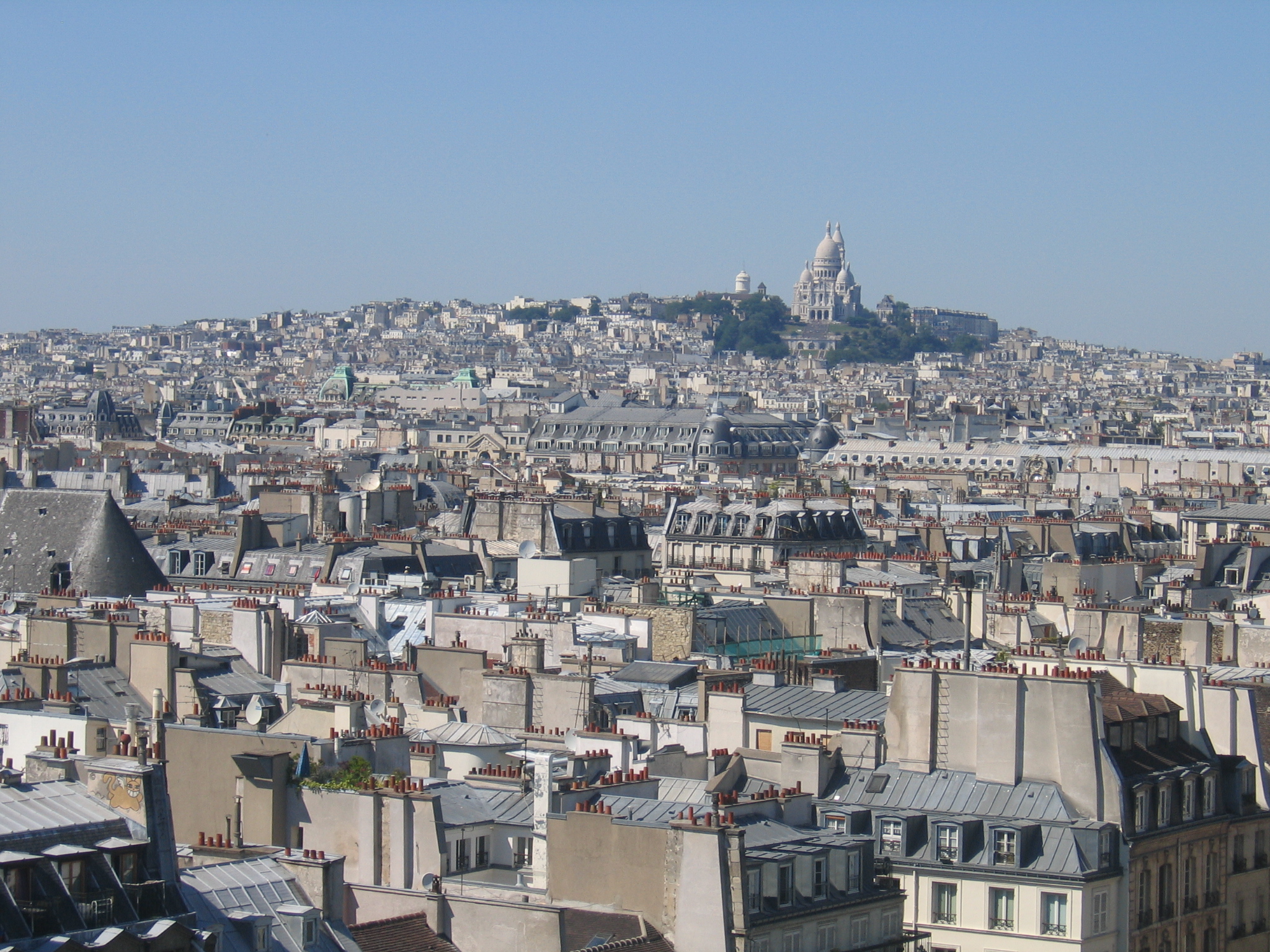
While the news is going nuts with the fact that currently Paris is covered in snow, I traveled there recently for a week that was much to short and very cold, with only a little bit of snow, but filled with wonderful friends and sights. One of my favorite parts of my trip was looking at the city’s fabled slate rooftops and red chimmenies from my friend L.’s 7th floor apartment. Yes, seven floors up and no elevator. It was how I evened out all the croissants I ate. For more view of the buildings, sky, and other pleasures of Paris in November view my set on Flickr.

Afternoon from the Apartment

Parisian Afternoon Sky and Rooftops

Bains Douches

More rooftops


The Good Life in Paris in November (and pas cher!)

Paris as seen from the Centre Pompidou

In case I haven’t talked your ear off about it lately, I am taking a trip to Paris (and Gent, Belgium) over Thanksgiving to visit my sister and friends and soak up some European ambiance. I haven’t been to France in over two years and it feels like an eternity (though I did go to lots of other awesome near and far places, so I’m not so sad).  In anticipation of my trip I made the ultimate google map of restaurants, boutiques and quirky museums that I want to check out while I am there. Some of them I’ll be sure not to miss and some are just so I know they are there in case I am in the neighborhood. Some of the boutiques might be pricey (though not by Paris or NYC standards) and many are just for looking. And for buying holiday gifts for friends and family.  Many of these suggestions are poached from the excellent sources of Cachemire et Soie, David Leibovitz, the New York Times Travel Section, and Pia Jane Bjkerk’s book Paris Made by Hand, as well as some of my own obsessions (like Monoprix, okay, guilty).

Enjoy and please let me know if there’s anywhere I should add! This is very heavy on north eastern Paris because that’s where I’ll be staying and those are the neighborhoods I love. But one of the best things about Paris is its walkability and the metro, so I can go anywhere!

View The Good Life in Paris in November in a larger map