Woodstock Chalet Weekend!

Relaxed chalet style: Built by Wendy jacket, cable knit sweater made by my mom, Mavi jeas, Swedish Hasbeens boots, vintage Coach purse (and unfortunately long hair!)

Imagine a place, not far from every day life, where you can let down your guard and truly be yourself. Imagine a place where you can dwell in a liminal space where you can give into your whims and be cocooned in warmth, friendship and peace. This place exists, on the map as well as in the imagination, in a tradition my friends and I have come to call “Chalet Weekend.”

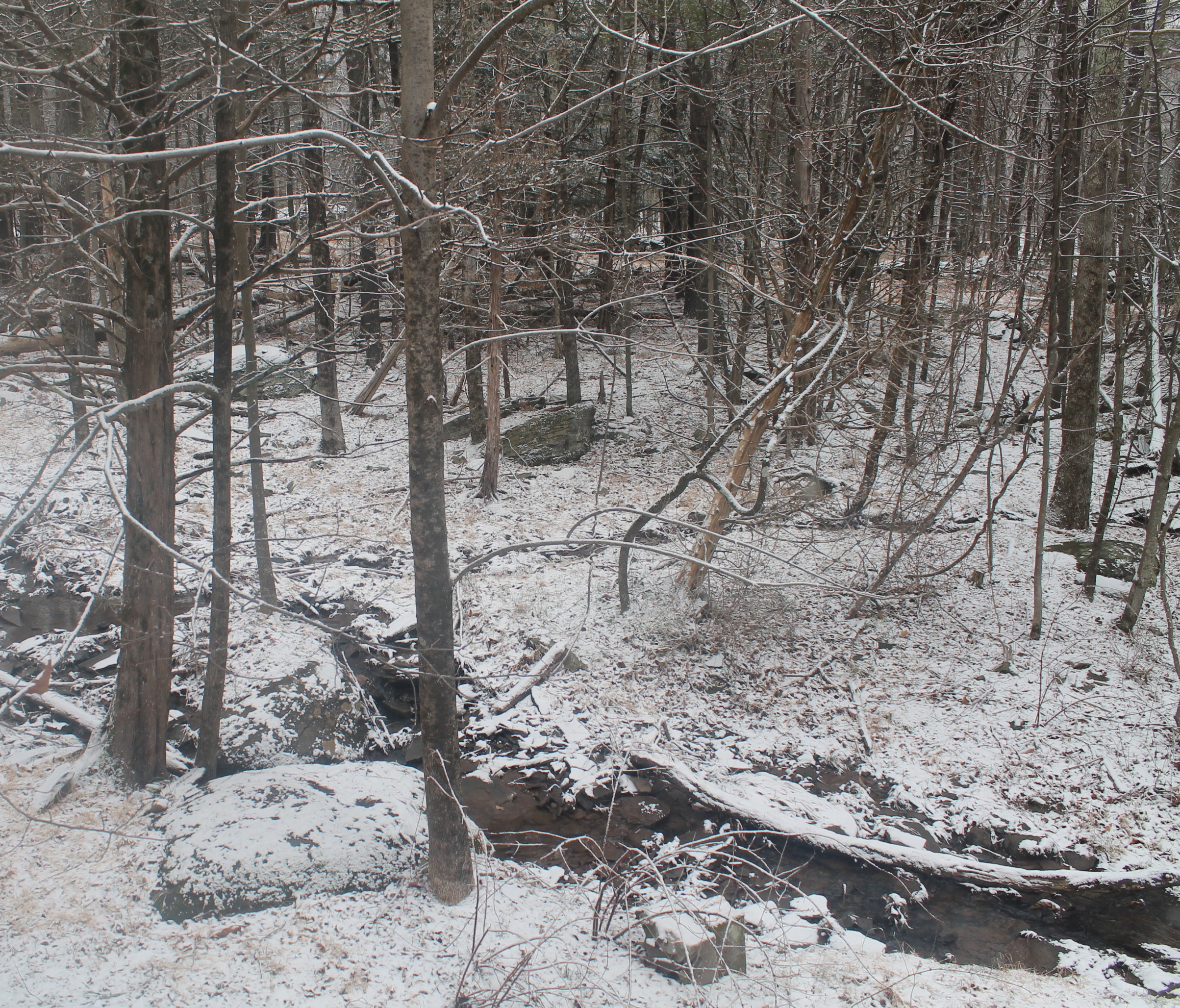
View from my bedroom window

The place is a rental chalet that sleeps twelve in the storied town of Woodstock, New York. Woodstock has been a place of escape and a home to artists and counter cultural visionaries for over 100 years. The chalet on Happy Cat Lane is quirky in layout, with lots of impractical architectural details and exposed wood. Most importantly there is a fireplace and two huge, seductively soft couches, an open kitchen and comfortable beds. It’s on a quiet dirt road not far from the artist’s colony Byrdcliffe, which itself offers another kind of retreat from the world.

Wood fire, Bloody Mary, happiness

Hah hah.

Morgane makes cookies from locally made cookie dough, an easy dessert!

These pancakes I am making are somehow really funny (and I get to show off my Petit Bateau shirt, bien sur)

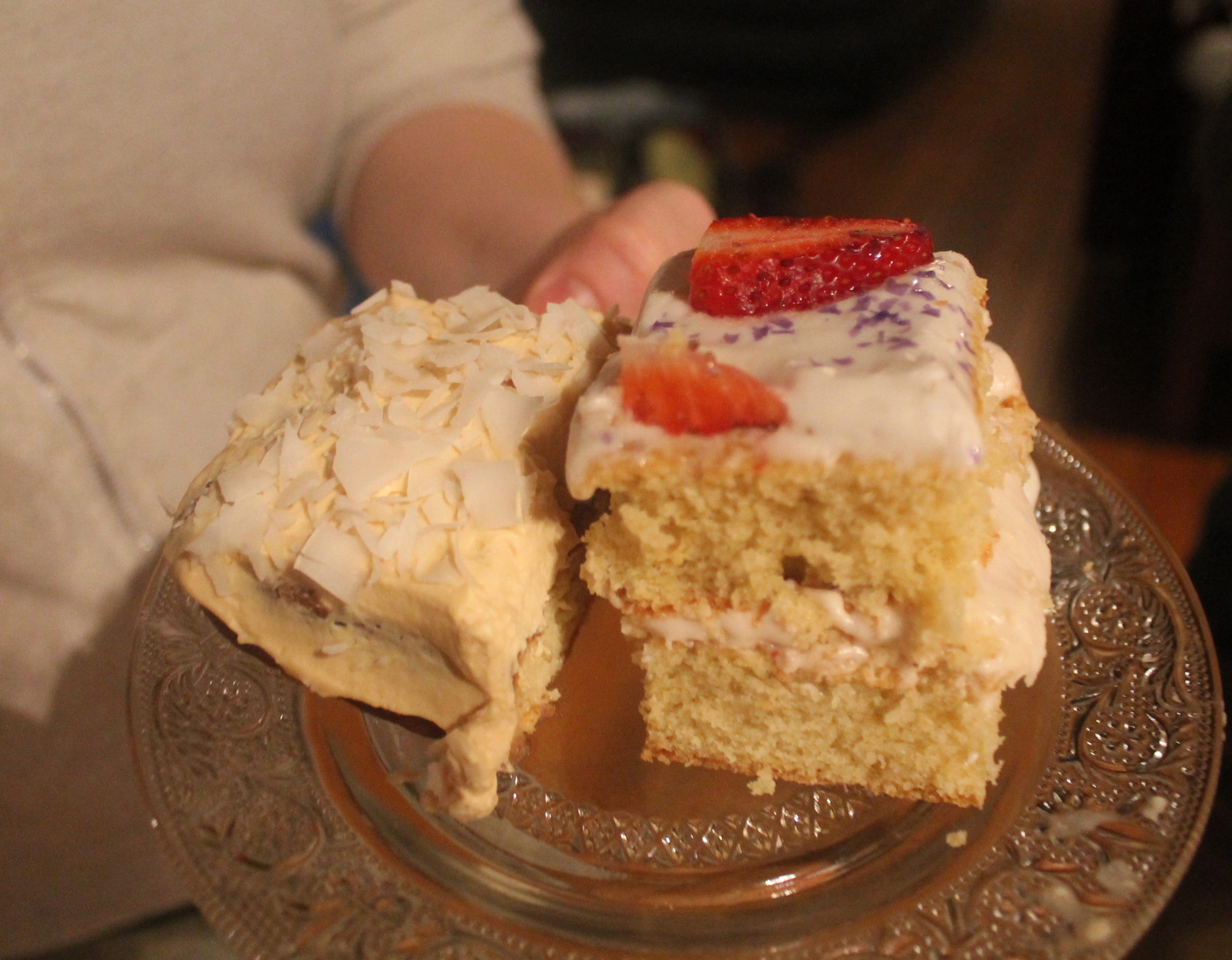
Two birthday girls means two birthday cakes (made by moi)! Tres leches with caramel whipped cream and coconut and lemon cake infused with Rosemary with Rosehip and Lavender frosting.

I used to hate on upstate New York, but now I’ve completely fallen under the spell of its gauzy light and rural charm. After the hectic grind of city life it feels a little bit like cheating to escape to the quiet woods for a few days. For me there is nothing better to combat the winter blues than a fire, cooking huge meals, celebrating birthdays and getting so absorbed in my friends and the present moment everything else just falls away.

Where do you go to escape the daily grind?

Hudson River, by Saugerties

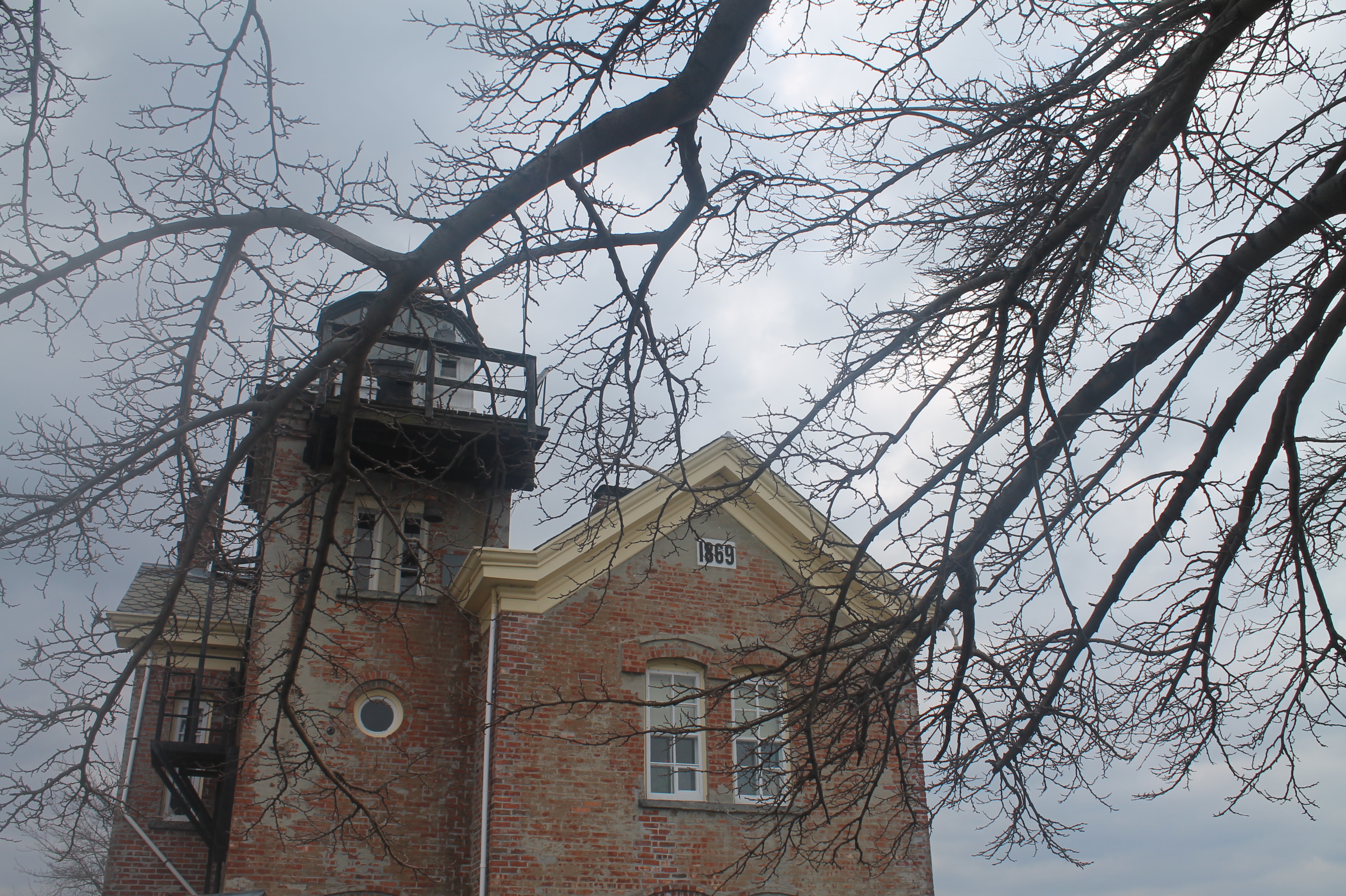
Saugerties Lighthouse

Kayaks at the Saugerties Lighthouse

For the practicalities: you can find plenty of amazing homes for rent upstate (or anywhere) on Home Away, Air BNB, or VRBO (which is connected to Home Away). The cheapest car rentals in New York City tend to be from All Car Rent-a- Car and there is also the affordable and convenient Adirondack Trailways bus. My three stops in Woodstock always are: Sunflower Natural Foods Market, Bread Alone bakery (amazing organic bagels, pastries, bread, sandwiches and coffee), and Woodstock Meats, a butcher shop with artisanal meats and cheeses and chalet essentials like firewood.

Chalet weekend crew! (sans K.)

A Year at 20 Jay

Lovely light and sky

I’ll return to the escapism of the tropics in a moment, but I couldn’t help but note that it has been a year and a few days since I started a new job in DUMBO (which stands for Down Under the Manhattan Bridge Overpass), Brooklyn. The neighborhood is wedged between the river, the BQE, the Navy Yard and old factories. It is home to galleries, arts organizations, fancy boutiques and a growing number of condos, yet still retains its quiet, cobbled, industrial feel. From my desk I have a view of the East River and use my iPhone to document the changing of the weather, seasons, clouds, light and sky. I’ve become an astute observer of light on smoke stacks and passing ferries, barges and tugs on the river. Enjoy my little window on New York City. There is a full set on Flickr.

Obligatory DUMBO afternoon view!

20 Jay Street #5

Early twilight in Brooklyn

20 Jay Street #6

Good morning, Brooklyn!

Searching for peace and clarity this morning

Faire du Sport!

Punk rope, punk rock

Getting ready for Punk Rope class

I used to wear my avoidance of sport as a badge of nerd culture pride. In high school after I quite the field hockey team I was allowed to take an “individualized athletic program” where I could practice the sport of my choosing for 3 hours a week. That amount of time seems like nothing now, but as a teenager it seemed like torture. I came from a place where long legged, blonde haired, soccer and lacrosse playing girls ruled the school. The rest of us just didn’t count quite as much. I wanted nothing to do with this culture. So the activities I chose to complete my sport requirement for high school graduation: horseback riding, modern dance, and roller skating.

I know the classic New Year’s resolution is to “loose weight and exercise.” As you know if you read this blog regularly, last year I lost 20 pounds and became a lifetime member of Weight Watchers. I don’t need (or want) to keep loosing, but I want to maintain and find a “new normal” for the level of activity that I do. While  I’ve practiced different sports intermittently for a long time: ballet, yoga, biking and swimming, I was never consistent about exercise. I’d do something for awhile and then stop, but I know I need to stay consistent to keep the weight off (I also need to keep tracking food as most of my weight gain or loss came from changing the way I ate).

Activities that I like both have some skill to them, so they get better with practice, but are open to anyone. I also like when they can be practiced independently, but have the potential to be social. The high school nerd in me still hates the idea of sport, so I have to trick myself into doing something that’s fun (ballet! swimming!), or useful (biking! It gets you places!).

January bike ride

Low and behold, in my determination to exercise regularly, I’ve come across a few classes in the New York-area I absolutely love, as well as some helpful resources I want to share in case you too have a resolution to get out there and get in shape.

I had the time of my life in the adult beginner ballet class at Mark Morris‘ studio in downtown Brooklyn, which I took with four other friends. It’s extremely motivating to know you are practicing at a school with some of the best modern dancers, and they also have life music in every class! Now that I am done with grad school I can’t wait to go back.

The class that changed my relationship to fitness was my friend Emily Kramer’s Spirit Boxing workshops. Open to women and trans people, these classes combine boxing conditioning with yoga stretching and centering. I found myself engaged on a physical, emotional, and intellectual level and felt supported, despite how out of shape I was. This class showed me I could do things I never thought possible, like run around Prospect Park and learn how to throw effective punches.

Lately I’ve been hitting up the Punk Rope class at the Greenpoint Y with my bandmate M. There’s classes in different parts of the country, but Tim and Shawna, the punk rope originators, run a high energy class with a new theme, sound track, and special exercises and drills every week. They call it “recess meets bootcamp” and I think that’s accurate! It’s so fun to jump to punk songs I don’t even notice how much I’m sweating. Plus, they got me to do sprinting drills, something I have not done since middle school!

I also want to add that what is so great about Tim and Shawna of Punk Rope and Emily of Spirit Boxing is that they are all activists dedicated to promoting health and fitness for kids who may not learn the value of exercise and healthy eating at school or home for many reasons. Learning from these teachers is inspiring on a deeper level.

Killerfemme active lifestyle: pumping iron with red nails

Finally, for learning to train on your own (and getting over fear and inertia) I found the site Stumptuous.com to be really helpful. While it’s geared towards women interested in lifting weights it’s got great advice for anyone who wants to pump iron, do it safely, and is dubious of gym culture.

What are your New Years resolutions? What have you found is the exercise for you?

I’ll also leave you with a little extra inspiration:

To Occupied to Occupy

One afternoon the other week my office was dismissed early from work due to unfounded fears that the Occupy Wallstreet movement was planning to shut down the NYC subway system. Now for my French readers the shutting down of a part of the city’s transit system due to a strike or a protest is a regular occurrence that provokes some grumbling, some shrugs, and, usually, begrudging support. In New York, however, it seemed to be provoke a lot of fear and confusion.  As one of my Facebook friends smartly commented, “Don’t the protesters know that the 1% does not take the subway? They take taxis, sheesh” (or have private cars).

This got me to thinking about my (largely unexpressed) thoughts on the Occupy movement. First and foremost, this fall I’m far too occupied to participate, unfortunately. In this terrible economy I made the decision to go back to university for my master’s degree and continue to work full time. When I began in the fall of 2009 I had the vain hope that by the time I finished the economy would be improved and I would be able to find a leadership position in an arts organization that pays a living wage. Still waiting on that one. However, this leaves me very little time for anything that is not work, school or a pressing concern related to my life or one of the many projects I have going.

But more seriously and to the point: what do I think of the Occupy movement? And isn’t contesting the policies that large corporations, banks, lobbyists and the US government supported that got us into this economic mess more important than my selfish concerns? In short, yes, they are, but…

Overall, I support the Occupy Wallstreet movement wholeheartedly. I think that their biggest victory has been to move forward and reframe the political and media discourse in the United States and world-wide. The movement has brought critique of the United States’ unequal, inefficient and unethical economic, labor and education policies to a mainstream audience. It has brought a more progressive tone to debates around the role of government in the economy and private life, which is a real relief after the rise of the Tea Party movement last year.

For me personally it is very heartening to see this style of protest come back in the United States after it the anti-globalization and anti-war movements (both of which I participated in) were squashed by Bush and the general post-9/11 political climate.  It’s also disgusting (and sadly unsurprising) to see how power continues to react when threatened, whether those are police on a California college campus or on the streets of New York.

However, as a student (soon to be graduate!) of public policy, the Occupy Wallstreet movement has not articulated any concrete list of policy goals. This is a strength, because it allows the movement to appeal to a broad range of people. After all, if you are claiming to represent the 99 percent (or even the 95% or the 90%) that is a huge range of people and opinions. However, this is also a weakness because it prevents the movement from gaining political support in a way that laws can be enacted and policies can be changed.

The Occupy movement has also gained much attention because it is led and fueled by young people. It has captured the imagination of highly educated people who have found no gainful employment due to the economy and have every right to be frustrated. Of course, organized labor, activists of all stripes, veterans and a diverse crowd has also joined in the movement. Many people involved in their early twenties are coming of age politically through their participation. I remember the feeling of being 19 to 22 and protesting, feeling like it could radically shift the way the world was organized. I do not write this condescendingly when I saw that protest is a right of passage and an inalienable right. However, many “occupiers” did not experience the way the Bush administration squashed opposition to the war in Iraq or debate around any number of his policies. I feel in many ways the institutional memory between US protest movements is short (or nonexistent) and the Occupy protestors are learning lessons that those protesting for years, between the 1950s and the 2000s, had to learn again and again.

I think what I feel is important to note is that in the United States we live in an economic and governmental that is incapable of radical change. It was set up that way and that has only become more entrenched. Do I think this is right? No, I think it’s an incredible inefficient, undemocratic system, but I also think that to retain any sense of democracy it will only change gradually. This is again why I am grateful for Occupy Wallstreet for re-framing  political debate, which Nicholas Kristoff wrote about eloquently in the New York Times.

To shift the conversation in the media and the mind of the general public away from “Will their camp be cleared again? Will the protest movement survive the winter? Who are these hippes?” it is high time that Occupy Wallstreet (even though it is leaderless, I know) put forth some policy alternatives for debate and discussion. This may mean that less than 99% of people support what they are trying to accomplish, but it will also increase their changes of having a lasting impact on our policy and not just our political imagination. It’s also important for the movement to grasp some political and economic realities of the political process in the US. Paul Krugman and Adam Davidson have a few important points to consider.

These economic times have produced a lot of uncertainty, a lot of hardship, and a lot of anger. It’s important to have a public place to go with those feelings and to find a place of hope and inspiration. However, it’s also important to construct sustainable survival strategies, to help people in small ways every day, to promote equity throughout society, and to think about economic and personal innovation despite the system we live in. That’s the role I’ve carved out for myself working in education and the arts. It’s not for everyone, but it’s what works for me. It’s small, it’s quiet, but I believe in it and that’s what I will continue to push for, day-in, day-out.

MiLK & Fruit Juice in NYC!

Photo by Anne Bourgeon

It started with a tweet, “When I am I going to see Corita play?” It seemed like a simple enough question, except that the author of the tweet was Michel, of the indie band MiLK & Fruit Juice and he lives in France. Unfortunately Corita did not have (and still does not have) any plans to play a show in France. Or anywhere else outside of New York. So I wrote back, “I don’t know, when are you coming to New York? I’ll set up a show.” Then I got a better idea, “Why don’t you play a solo show with us?”  When Michel told me he was coming to NYC in September I wasted no time in booking a venue. However, I knew the other members of MiLK & Fruit Juice could not come to NYC and that being on stage alone in a new city is intimidating, and so I volunteered to be the backing band.

Photo by Anne Bourgeon

First of all, let me explain why I love MiLK & Fruit Juice: Michel writes catchy, dreamy songs that are full of heart. Some of them sound a bit twee, with with accents of toy instruments and excellent backing vocals from Marjorie and Sabine, but there’s also a twist of sadness, irony and realism. I am delighted to have met someone all the way across the Atlantic that shares so many of the same musical interests and passions as me. While that may seem like a small thing in this Internet age, when you meet in person, it still seems pretty magical.

Photo by Anne Bourgeon

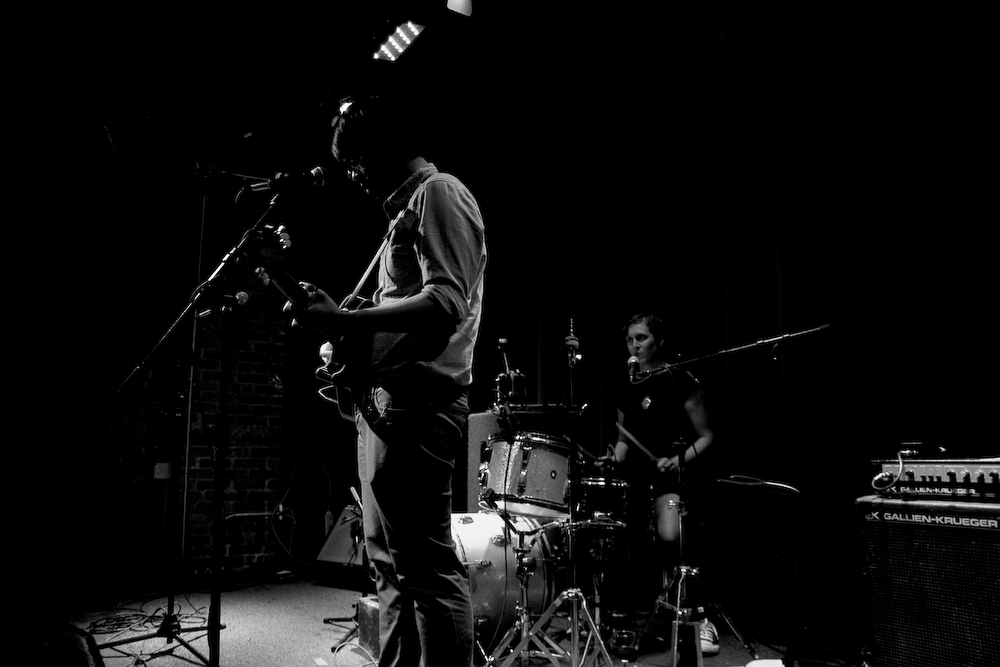
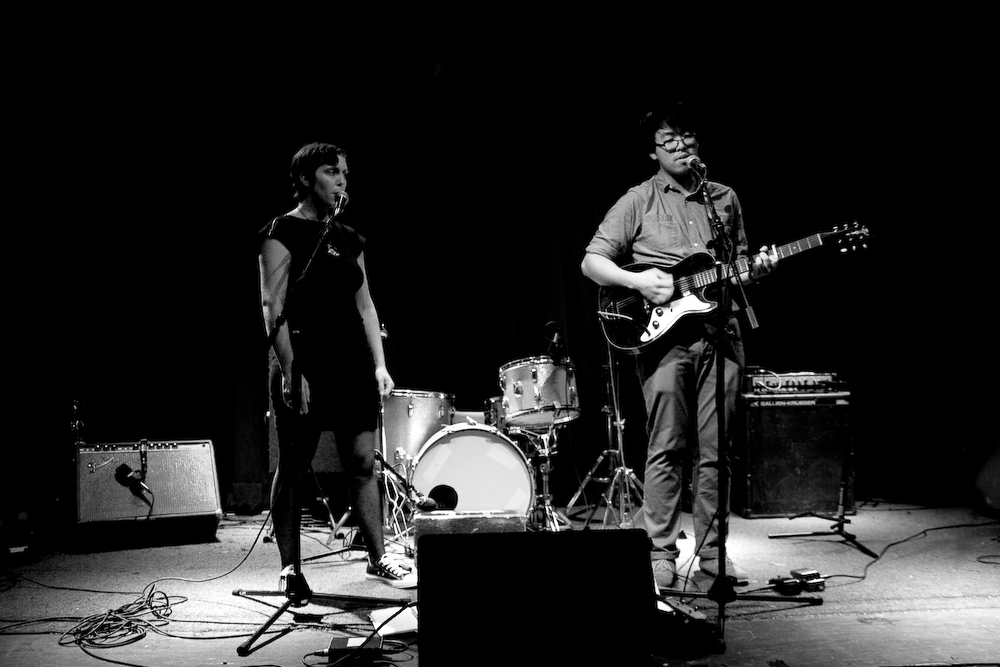
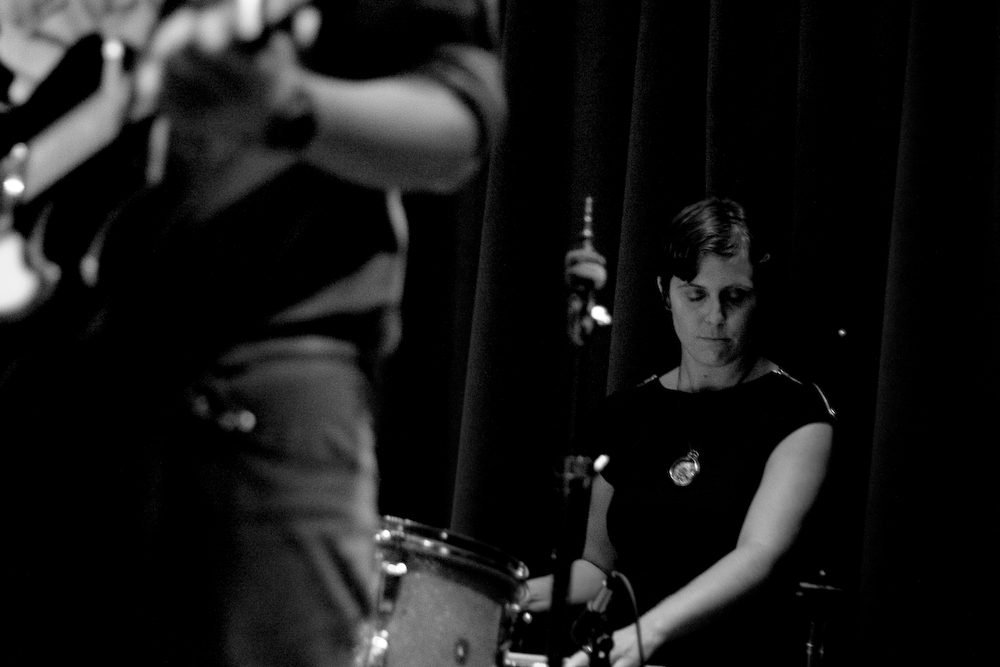
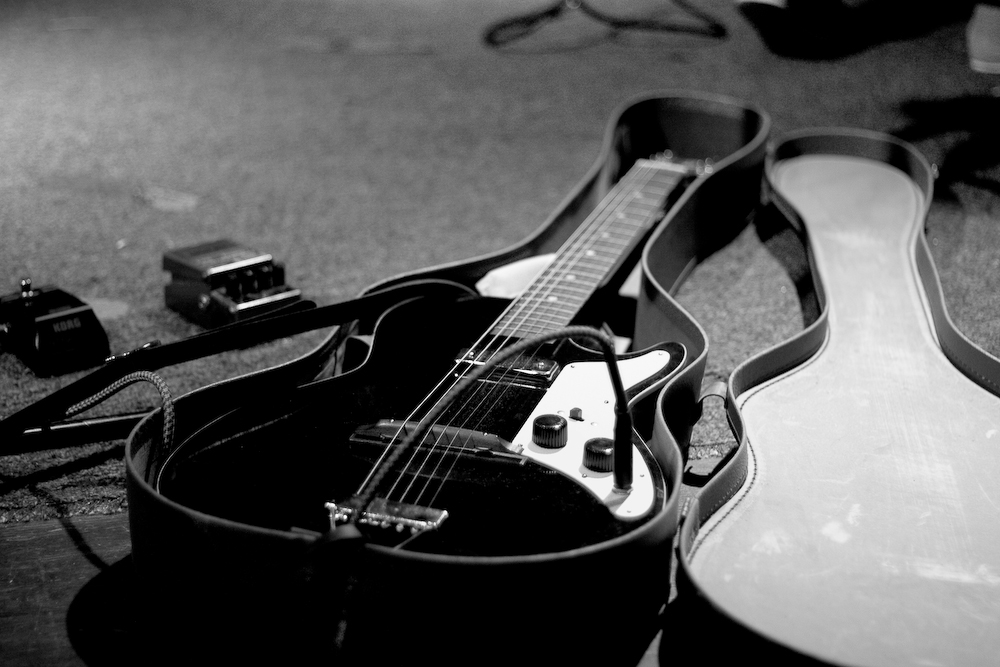
On a rainy night in September at Spike Hill in Williamsburg the Pale Lights, MiLK & Fruit Juice and Corita shared the stage. Michel and I had one practice together under our belt and I was playing drums and singing back up on five of his songs. The day of the show I listened to the songs from his well-crafted album I’m Cold Handed Because I Have No Heart to Pump The Blood Through My Fingers  on repeat.  That night Michel  debuted a beautiful, vintage Silvertone guitar he had found at Rivington guitars.  I got to break out of my usual role as a guitar player and play drums, with drum sticks that Lisa Goldstein of the Pale Lights loaned to me for Michel’s set.  Apparently I kept the fact that I play drums secret from my friends, but I actually took drum lessons for several years in middle school! I never really graduated beyond a 4/4 rock beat though. In any event, it was really fun (and a little nerve wracking) to be on stage playing drums supporting a friend whose music I love and who lives so far away. Anne, who co-runs the label MonsterK7 in Montreal and Paris, took these beautiful photos and video, and Sabine was kind enough to share with me. Enjoy and if you like Michel’s music perhaps you will set up a show for him in your town! Or at least buy his record.

Photo by Anne Bourgeon

Photo by Anne Bourgeon

Photo by Anne Bourgeon

Photo by Anne Bourgeon

Reluctant Reflections Ten Years Later

Heaven's garden (wishing all peace this weekend)

Islamic tile work representing heaven as a garden at the Brooklyn Museum

I’d prefer not to say anything about today. Earlier this week I filled out the New York Time’s interactive map pinpointing where I was on September 11, 2001 (17 Union Square West in my freshman college dorm) and my reflections 10 years on. I chose “unmoved.” I’m not unmoved in that I don’t feel empathy for those who lost friends and loved ones that day. At the most basic, I wish that today didn’t become a big patriotic hullabaloo. I upsets me that it’s just another chance to put our hands over our hearts and say “God Bless America,” and forget about the rest of the world. I’m tired of how this day was turned into an excuse for war, a grab for power, a justification for racism, and a suppression of human rights and civil liberties in the United States and abroad.

Ten years ago I had arrived in New York an idealistic, moody activist  ready for her freshman year at a liberal arts college and ready to fall in love with New York (or at least give the city a chance). September 11th didn’t change that, but it changed my focus. Before the struggle against globalization and the need to undo the injustices of colonialism seemed abstract. September 11th brought them into focus and made me think about the consequences of centuries of oppression. It also made some struggles and concerns pale in comparison.

Lower Manhattan, Early September, 2001

Maybe it’s because I was in Union Square on that morning and I looked downtown and saw the smoke and heard the sirens (and breathed that scorched , chemical laden air for weeks afterwards), and remember the collective gasp that went up when the towers collapsed, but I always felt that September 11th was a tragedy centered in New York.

Ever since that morning I’ve also been both proud of certain responses in this city and ashamed of others. I remember drawing on sidewalks with chalk the night of September 11th 2001, writing, “An eye for an eye makes the world blind.” I remember the huge memorials of candles set up in Union Square. I remember clearly rallies every Saturday at the Metropolitan Detention Center in Sunset Park, Brooklyn (my neighborhood) to demand the release of immigrants detained after 9/11 that were held for months without trial. At the same time, New Yorkers raised huge opposition to bombing Afghanistan and later Iraq.  Most people were speaking out against racism, even while immigration authorities were acting on it. I think the New York Time’s op-ed said it best in the piece What New York Didn’t Loose After 9/11. The larger impulse was towards helping those impacted by the tragedy, not towards revenge, but towards community, openness, and reflection. This is a stalwart city, tough, but one that stands up for its own and (in the best of cases) doesn’t discriminate between who is and who is not a New Yorker.

Lower Manhattan, November, 2001

September 11th made me determined to love this city and stick with it through all of the challenges it posed. Ten years later here I am. Today is not one for ceremonies and listening to those in power, and it looks like I’m not alone in this. Today is time for enjoying the life I’ve built here piece by piece, despite the tragedy, despite eight years of the worst president this country has ever known, and despite my own personal roadblocks and frustrations. One of the comments on the New York Times’ map called the past ten years “a lost decade.” I disagree. This decade has been hugely significant to me personally. I went from a teenager to an adult, I struggled, I built my life, and I spoke up, even with such dreary politics and global realities as a backdrop. Today I’ll have brunch with friends, ride my bike along the waterfront and maybe drink a beer brewed right here in Brooklyn. Here’s to you, New York! To your diversity, acceptance, your resilience, and to the people of this city and the world!

Here is New York After 10 Years

Brownstone Home

Photo in front of my old apartment taken by Leila Bergougnoux in the fall of 2007.

These scrubbed clean, clear blue skies of late summer and early fall remind me that I moved to New York City ten years ago this week. It’s been quite a decade for New York City and for me personally.  I moved here reluctantly to attend college after a dreamy year spent living in Portland, Oregon, working very little and indulging in my creative projects and wallowing in what remained of my teen angst. After growing up in Maine I was dead-set against going to college on a quaint campus and tired of small town life in general. On visits throughout high school to New York City I feel in love. It had it all: art, culture, fashion, food and excitement. It was the polar opposite of where I came from. “Who needs trees?” I said, “The nature in the parks will suit me just fine.”

Rigging and Manhattan

New York has not ceased to amaze and surprise me, but moving here was not an easy transition. I got sick immediately from the polluted air, the noise from the construction outside of my window seemed to bore into my skull, and then September 11th happened. The events of that day and what followed completely reshaped what I expected from the city, academic, activism, and work. I really can’t talk about 10 years in New York without talking about September 11th and all that came after, but this post really isn’t about September 11th. Let’s suffice it to say this morning the public radio station replayed reporting from that morning and I had to sit down and cry.

I didn’t think I would stay in New York very long after graduation. I decided that I would give it two years after I got my diploma, but when I started working in museums and arts organizations I kept pushing that timeline back, until finally I gave up and decided to stay here. I felt like my friendships and the adult life I’ve been able to construct were too hard won to walk away from. I’ve lived in Sunset Park, Brooklyn since 2002 and slowly the borough worked its charms on me and I feel like it’s an important part of my identity. I also discovered another great thing about New York: its proximity to Europe. Flights to Europe from New York are plentiful and can be cheap if you know how to search.

If Paris is France...

But looking back over these past ten years I’ve wrote a lot about New York and I wanted to share a little bit of those thoughts to chart how my relationship to the city has changed and evolved.

“You always choose the most challenging position you can think of!” my mother chided me when I moved to New York City to go to college.  “Of course you picked the biggest, toughest, most of expensive city in the US, you couldn’t imagine less!” she reminded me when I lamented how difficult my new NYC life was.  And it was difficult.

In October of 2002 I wrote, “New York is bad posture and holding my breath. Too many aches and tight, sore shoulders and no one to work them out.”

At the brink of the (still ongoing) war against Iraq in 2003 I wrote, “I need to write something about how it feels to be in New York right now – the subway stations full of national guard, machine guns ready. How is it constricting my thoughts and hopes and playing on my fear?”

But the city still entranced me, “For me the magic of New York isn’t in Manhattan, it’s in the strange faraway feeling places in the outer boroughs that you can still take the subway train to. A collision of urban and beach, crashing waves and a $5 ride on the Wonder Wheel. Vacant lots in gentrified neighborhoods, cracking streets, rusting hunks of abandoned junk, weeds in the middle of poshness. It shows the gaps in the idea of glittery concrete and steel and shows that cities have a force that cannot be regulated.”

Rockaway Beach

Rockaway Beach

Full of Brooklyn pride, I wrote a love letter to Brooklyn for the last issue of my zine Indulgence, which I put out in 2008. “If Brooklyn were not attached to the rest of New York it would still be among the largest cities in the United States.  I’ve been living here for six years. That doesn’t make me a local, but it means I have grown to appreciate my borough through all my early-to mid-to late twenties ups and downs. Brooklyn is my immediate reality and my basis of comparison. Brooklyn feels at times just as much like a small town, an industrial landscape, and even, suburban.”

NYC Rainbow

NYC Rainbow, Fall 2007

I think it is E.B. White who describes New York best, so I’m going to leave you with his words. My mother gave me Here is New York for Christmas after I’d been living here for 4 years. I was struck by how this little book, written about New York in the Forites, captures the New York I experience every day.

The opening: “There are roughly three New Yorks. There is, first, the New York of the man or woman who was born there, who takes the city for granted and accepts its size, its turbulence as natural and inevitable. Second, there is the New York of the commuter–the city that is devoured by locusts each day and spat out each night. Third, there is New York of the person who was born somewhere else and came to New York in quest of something. Of these trembling cities the greatest is the last–the city of final destination, the city that is a goal. It is this third city that accounts for New York’s high strung disposition, its poetical deportment, its dedication to the arts, and its incomparable achievements.”

Brooklyn and Manhattan Bridges

And the closing:

“The city, for the first time in its long history, is destructible. A single flight of planes no bigger than a wedge of geese can quickly end this island fantasy, burn the towers, crumble the bridges, turn the underground passages into lethal chambers, cremate the millions. The intimation of mortality is part of New York now; in the sounds of jets overhead, in the black headlines of the latest editions.

All dwellers in cities must live with the stubborn fact of annihilation; in New York the fact is somewhat more concentrated because of the concentration of the city itself, and because, of all targets, New York has a certain clear priority. In the mind of whatever perverted dreamer might loose the lightning, New York must hold a steady, irresistible charm.”

Thank you, Mr. White. And here’s to another ten years.

Celebrating the end of our Brooklyn Museum internship in 2006 in the Brooklyn Botanic Garden
C’mon Irene

Here is New York, come hell or high water

Post-Irene skyline view from Sunset Park

So how did I survive New York’s biggest storm in decades? Just fine, thank you. I’m really not one to buy into weather related hype, but I’ll admit as I read the storm reports rolling out on Twitter (yes, this is how I get my up to the minute news these days) I began to get a little jumpy. I spent some time pouring over the map of evacuation zones the Office of Emergency Management put out. I read up on hurricane tips offered by everyone from the mayors office to my electric company. Fortunately, I don’t live in an evacuation zone, but actually on the second highest hill in Brooklyn. My apartment building is a solidly constructed brick building from 1931 that has withstood many a storm. So, I figured, a little rain, a little wind, big deal. In fact, I think the Fucked in Park Slope blog captured my kind of storm prep the best with this entry and chart.

Dancing in the park after the storm

A couple dances in Sunset Park after the storm

Honestly, I think that the NYC government did a pretty decent job of informing everyone. They had a plan, they were organized and they got the word out. I thin they got a little hysterical, sure. I think their move to evacuate all of the Rockaways was a little bit much and that they were making up for their complete lack of planning with this past winter’s big snow storm. But I followed directions, filled up my water bottles and filled the bathtub with water in case we lost electricity and thus water pressure. We never lost electricity. Heck, because my windows are west facing I even kept them open during more of the storm and no rain blew in.

Post storm wind and clouds

Windowblown clouds after the storm

It was really sweet that all of my far-away friends reached out with their support and well-wishes. New York truly is a global city that many hold in their hearts. Since I moved here 10 years ago (to the week!) I’ve experienced September 11th, several huge blizzards, two tornadoes, and an earth quake (which I didn’t feel). I missed the black out of 2003 because I was in Oregon for the summer. I’ve also experienced so many personal trials and tribulations that come with negotiating life in a huge metropolis. New York is a stalwart city and it passes that on to its residents. To live here and not loose your mind I think you need to develop a sense of resolve, calm and willingness to be ready for anything.
Post-Irene Sunset

My review of Gary Indiana’s “Last Seen Entering the Biltmore” on NYFA Current!

Gary Indiana

There was a New York City that I dreamed of when I was growing up. It was a mixture of Greenwich Village during the Beatnik era and the Lower East Side of the 1980’s. It was full of punks, dreamers,  activists and artists. The dangers that might have been lurking there were more aesthetic than real. Poverty and hunger were stylish accouterments. All who were there possessed the ability to transform the urban environment. While obviously this political, arty urban paradise existed only in my imagination some lived it in all its gritty, dangerous, complicated, hungry reality. Patty Smith lucidly captures it in her recent book Just Kids.  Gary Indiana’s new compilation out from MIT Press, Last Seen Entering the Biltmore, collects his poems, prose, short plays and works of art from the late 70’s to the present, chronicling through his artistic production his time in this environment after he made the decision to “not to do anything he didn’t want to do” and to become a writer. Last Seen Entering the Biltmore captures Indiana’s sense of absurd and also his strong artistic integrity. I wrote a full review for NYFA’s online magazine for artists, NYFA Current, and would be honored if you checked it out here.

Things That Make Me Go “Argh”

"Winning a bike race"

I enjoy biking and public goods like the shore parkway bikelane, a relatively clean New York Harbor, and the Verrazzano bridge (even though bikes and pedestrians cannot go on it)

It’s been a long time since there’s been anything “political” on this blog. I’ve honestly stayed away from it, letting my politics play out in my real life and letting the blog be for posting pictures of pretty things that I find and snapshots and reflections from my adventures near and far. But these past few weeks I’ve found myself the maddest I’ve been about politics since George W. Bush was in office! There’s a few big issues that are sticking in my craw, but I feel that they can all be understood via the prism of economic analysis.

First, the issues:

The lawsuit against NYC Transportation Commissioner Janette Sadik-Khan over the (amazing!) bike lane on Prospect Park West in Brooklyn and general backlash against bike lanes, bikers, and traffic calming measures in New York in general. Never mind that traffic accidents are down, speeding is down on Prospect Park West, bike ridership is up, and business has increased in areas where traffic calming measures have been put into place, such as Broadway.

The backlash against NPR and the move by the federal government to remove all federal funding from NPR and PBS. Despite Republicans constant whining that NPR does not represent them fairly or give them enough air time, NPR often features more republican interviews than democrats and is really one of the few truly balanced news options available for the US. And never mind that PBS is the only channel on television that offers intelligent, non-hyperbolic analysis of the evolving situation in the Middle East (thank you, Charlie Rose).

The move to severely reduce funding for the National Endowment for the Arts on the federal level, and the New York State Council on the Arts on the state level. Yes, we have a deficit, but is cutting funding to the arts, which provides jobs and enriches our culture (in fact, defines it) worth the benefit and savings? I say no.

The move by the federal government to remove all funding from Planned Parenthood. Barefoot and in the kitchen, here we come.

Excuse my sarcasm, but others have done a much better job outlining the situation than I. The question on my mind lately has been, “Where is the coordinated, energetic movement to support and protect these important public assets?” Yes, there’s been campaigns to write your representatives, and some nifty protests, but not widespread, public support. “Why?” I asked myself, “When many people benefit from these resources.” Fortunately, there’s economics.

Basically, it goes back to the theory of public goods versus private goods. A good is public when anyone can access it (as in they are “not excludable”) and one persons use does not diminish another person’s use. Rival goods are when anyone can access it, but a person’s use of that good takes away from another person’s enjoyment of that good. Economist Jonathan Gruber states that most goods we think of as “public goods” are really “impure public goods,” because they are not fully non-excludable or non-rival. ANYWAY… economic theory goes that people undervalue what they can get for free or don’t have to directly pay for. While we all pay for public services like roads, parks, and libraries via our taxes, we tend to undervalue them because we are not directly paying for that service.

Then there’s the problem of a “free rider,” someone who doesn’t pay at all for these services (as in “public goods”) and enjoys their benefits. NPR is a good example. I’m a total free rider. I haven’t given to WNYC in about 4 years, but I listen everyday! Bike lanes are another example. I have absolutely benefited from the work of Janet Sadik-Khan and the Department of Transportation to make the city a more bike and pedestrian friendly place. I just joined Transportation Alternatives last year to put my money where my wheels and feet are, but mostly I just took for granted that things would get “better” for those of us non-drivers.

So my theory is that most people who enjoy services that tend to be championed by the democrats (but really cross party lines and have nothing to do with political parties really) are free riders who enjoy the benefits without thinking about the cost. In addition, people like drivers who are angry that their parking has been reduced by a bike lane and that they can no longer drive 50 miles an hour down a city street are not thinking about the fact that public resources like city streets can be rival in consumption and that their use of streets takes away from the ability of others to use it. In addition, drivers and parkers are “free riders” because they don’t think of cost of streets and parking and when they are asked to bear even a little bit of it (such as in Mayor Bloomberg’s congestion pricing proposal for downtown Manhattan) they freak out and bring a lawsuit.

This also relates to theories of positive and negatives “externalities”- the additional social benefit (positive) or cost (negative) generated by a good or activity. I would say that bike lanes are a positive externality and thus undervalued, and driving is a negative externality, which means that society bears a cost for driving (through air pollution, dangerous and congested streets, etc.) that is not borne by the drivers themselves.

I was totally vindicated because a writer for the Economist came up with almost the exact same theory in respect to the bike lanes! I am so grateful for the Economist I will certainly renew my subscription!

But my message is this: Think about the benefit you receive from the things you value, whether it be safe streets, quality news coverage, reproductive health and choice, and a vibrant arts community, and think about how you can support those. It need not be with money, but think about the opportunity cost here: when we are talking about public goods, whatever we give up, be it our time, money or energy, we get back even more than we could possibly put a price on.